
www.technology4environment.com
05
'26
Written on Modified on
High-Performance Computing and Sustainable Infrastructure Solutions for Climate Action
Fujitsu presented advanced digital infrastructure resilience and energy-efficient computing systems to enable global decarbonization at COP31.
www.fujitsu.com
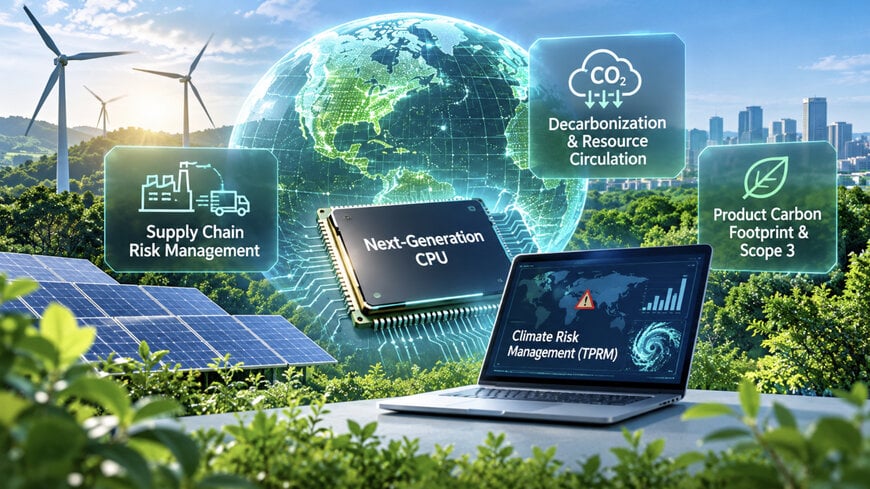
The 31st United Nations Climate Change Conference (COP31), held from November 9 to November 20, 2026, at the Antalya Expo Center in the Aksu district of Antalya, Republic of Türkiye, served as a crucial global forum for negotiating and advancing collective climate measures. During high-level sessions, advanced digital solutions, automated risk management architectures, and energy-efficient hardware approaches were presented to support industrial transformation, supply chain decarbonization, and resource circularity across energy-intensive application areas.
Core Technology and System Architecture
Modern industrial sustainability initiatives rely on integrated digital infrastructure platforms and specialized silicon architectures to process heavy computational workloads while minimizing power consumption. The next-generation processor design, "FUJITSU-MONAKA," utilizes advanced microarchitecture principles to maximize performance per watt, addressing the escalating power demands associated with artificial intelligence and high-performance data processing infrastructure.
Concurrently, automated intelligence frameworks such as Third Party Risk Management (TPRM) collect and integrate operational data—including procurement, production telemetry, and enterprise logistics—with real-time environmental risk parameters. By leveraging artificial intelligence to process these inputs, the system visualizes physical vulnerabilities and identifies required operational actions without manual intervention. Furthermore, enterprise platforms such as the "Sustainability Value Accelerator" utilize standardized data linkage technologies and participation protocols like the Partnership for Carbon Transparency (PACT) to track material flows and calculate product carbon footprints across complex corporate ecosystems.
Deployment and Implementation
The deployment of enterprise climate resilience systems requires structured integration with existing supply chain management tools and IT infrastructure. The TPRM architecture is deployed by ingesting enterprise resource planning logs and real-time geospatial meteorological feeds into a centralized analytics layer. Implementation occurs through phased data mapping, interface synchronization with external risk monitoring APIs, and automated alert configuration.
In operational deployment, the platform continuously monitors global supply chain nodes against physical climate hazards, instantly notifying management channels to reroute logistics or adjust production inventories. Similarly, high-efficiency hardware platforms like the FUJITSU-MONAKA processor are integrated directly into enterprise data center architectures, replacing legacy computing modules to lower overall facility power utilization effectiveness (PUE) without requiring application-level software rewrites.
Industry Applications
These technical solutions are applied across global supply chains, manufacturing operations, logistics networks, and data center infrastructure. In manufacturing and industrial automation, automated early warning systems provide continuous process stability by anticipating weather-induced disruptions to raw material supply lines.
In information technology and cloud services, energy-efficient server processors mitigate the environmental impact of expanding artificial intelligence workloads. These implementations yield measurable operational benefits, including enhanced process safety, optimized energy security, and improved supply chain maintainability under volatile operating conditions.
Operational Impact and Performance Metrics
Quantitative evaluations of automated risk management systems demonstrate significant operational improvements. Through internal deployment within corporate supply chains, the TPRM framework reduced the time elapsed between natural disaster occurrences and the execution of remedial business actions from two weeks down to a few hours.
At the hardware level, next-generation processor architectures deliver substantial gains in energy efficiency, directly addressing power consumption constraints in social infrastructure and reducing Scope 2 emissions associated with enterprise computing operations. Data traceability frameworks further enable organizations to quantify Scope 3 emissions with empirical accuracy, replacing estimation models with verified supply chain data exchanges.
Edited by Sucithra Mani, Induportals editor – adapted by AI
www.fujitsu.com
