
www.technology4environment.com
30
'26
Written on Modified on
ArcelorMittal Achieves Breakthrough Carbon Capture Trial to Decarbonise Steel Production
A pilot trial at the Gent plant captured over ninety percent of carbon emissions, paving the way for substantial long-term industrial decarbonisation across integrated steelmaking operations.
corporate.arcelormittal.com
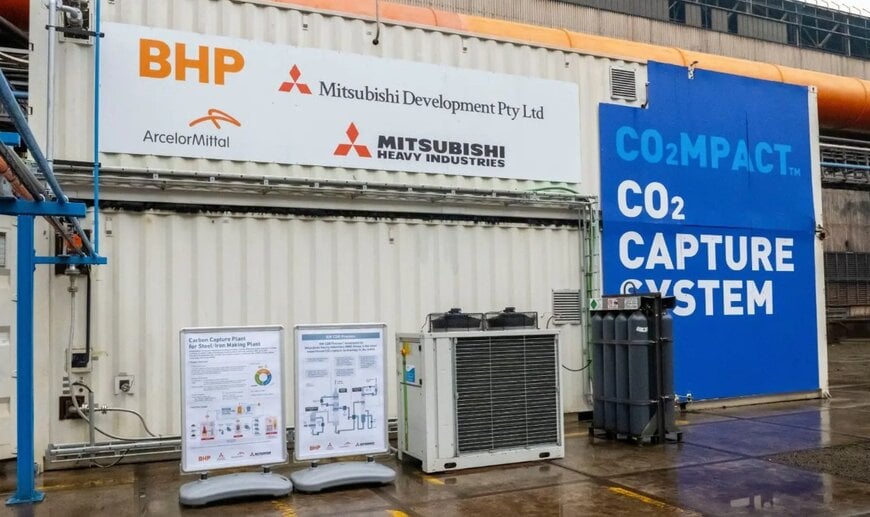
ArcelorMittal, Mitsubishi Heavy Industries (MHI), BHP, and Mitsubishi Development Pty (MDP) collaborated to evaluate carbon capture technology in commercial steel manufacturing. The project verifies the separation efficiency and operational viability of chemical absorption systems treating steelmaking off-gas containing particulate matter and chemical contaminants.
Industrial Decarbonization Challenges in Integrated Steelmaking
Blast furnace operations generate large volumes of process gas with elevated concentrations of carbon dioxide and carbon monoxide. In typical steelmaking facilities, this off-gas contains dust, sulfur-bearing compounds, and other by-products that complicate post-treatment systems. Decarbonizing this sector requires multi-company integration, combining raw material expertise, proprietary chemical engineering, and operational steel plant infrastructure. ArcelorMittal hosted the trial at its integrated facility in Gent, Belgium; MHI supplied the capture system and managed process engineering; and BHP and MDP funded the project as key raw material suppliers.
Technical Solution and Separation Mechanism
Testing utilized MHI proprietary Advanced KM CDR Process, an amine-based chemical absorption technology designed to isolate carbon dioxide from process gas streams. During the trial, the pilot system treated a portion of the blast furnace off-gas prior to combustion, separating carbon dioxide while leaving carbon monoxide intact. Preserving the carbon monoxide fraction allows the remaining gas to serve as fuel for downstream plant heating and on-site power generation.
Phase One Trial Parameters and Operational Performance
Phase 1 operational testing ran for over 4,500 hours under industrial operating conditions. The pilot unit demonstrated separation rates exceeding 90 percent for carbon dioxide. Engineering models derived from the trial data project that a full-scale deployment on pre-combustion blast furnace gas could reduce the facility carbon dioxide intensity by up to 24 percent. The prolonged testing window validated solvent stability and process resistance against trace contaminants typical of primary ironmaking emissions.
Phase Two Scope and Multi-Point Emissions Integration
The second phase of the trial broadens testing to post-combustion gases from the hot strip mill reheating furnace. Reheating furnaces elevate thick steel slabs to rolling temperatures using a dynamic fuel mixture of natural gas, blast furnace off-gas, coke oven gas, and basic oxygen furnace gas. Phase 2 assesses the capture system under fluctuating flue-gas compositions, evaluating solvent performance against diverse combustion dynamics.
Compounding carbon capture across both primary ironmaking and downstream thermal processing creates a technical pathway toward low-emission steel production. Operational datasets from both phases will serve as the technical baseline for engineering studies evaluating commercial-scale integration across the steel sector.
Edited by Evgeny Churilov, Induportals Media - Adapted by AI.
www.corporate.arcelormittal.com
