
www.technology4environment.com
18
'25
Written on Modified on
ABB Achieves First UL98B Solar Certification
ABB earns industry-first UL98B certification for its 2000V switch-disconnector, enabling higher power, reduced costs, and faster installation in utility-scale solar.
global.abb
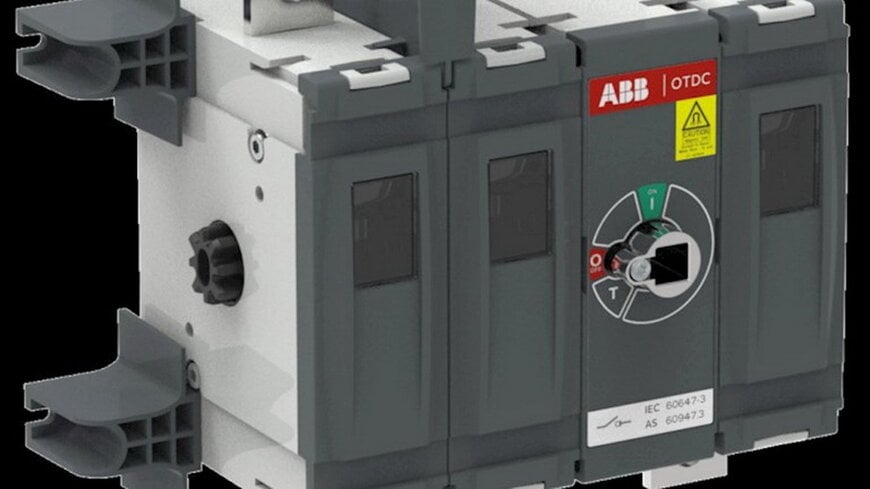
ABB announced that it has earned UL98B certification for its 2000V OTDC switch-disconnector, the first to do so in the renewable energy industry. Over the last 20 years, solar systems have evolved to handle progressively higher voltages, resulting in lower system costs and higher energy yield. The first UL certification for a 2000V switch marks a significant milestone for utility-scale solar development, cementing ABB as an industry leader accelerating the sector’s long-anticipated transition to a 2000V standard.
UL certifications are crucial for ensuring product safety, reliability, and performance in the U.S. renewable energy industry. UL Solutions, a global leader in applied safety science, conducts rigorous testing and evaluations to ensure products meet electrical, fire, mechanical, and environmental performance standards. While 2000V solar modules are becoming commercially available, 2000V solar systems will require inverters and combiner boxes with switches that can also handle higher voltage. Without UL-listed switches, combiner box manufacturers face significant challenges in obtaining their own UL certifications, creating bottlenecks in the supply chain for 2000V systems.
"This certification is a breakthrough for the solar industry," said Bill Stewart, Product Marketing Director, ABB Smart Power. "We're proud to be the first to market with a UL-certified 2000V solution that directly addresses our customers' demands for higher efficiency and lower costs without compromising quality. Innovations like this are critical to accelerating the energy transition."
ABB’s three-pole DC switch-disconnector is designed for 2000V utility-scale photovoltaic power plants, enabling increased power output while reducing electrical balance of system (EBOS) costs by up to 15% through faster installation times, fewer components and lower labor costs. The 2000V design optimization also allows for more modules per string to improve energy yield across the lifespan of solar installations, which ultimately drives costs down for developers and EPCs.
2000V products are expected to increase from less than 5 GW in 2026 to 380 GW by 2030. At that time, they are predicted to comprise 77% of all utility-scale solar projects worldwide by 2030.
www.new.abb.com
