
www.technology4environment.com
04
'26
Written on Modified on
Wärtsilä completes marine sector project to reduce methane emissions on vessels
Wärtsilä’s 50DF to spark gas conversion project will modify the engines in service to operate as spark gas, using spark ignition versus diesel pilot fuel to initiate combustion.
www.wartsila.com
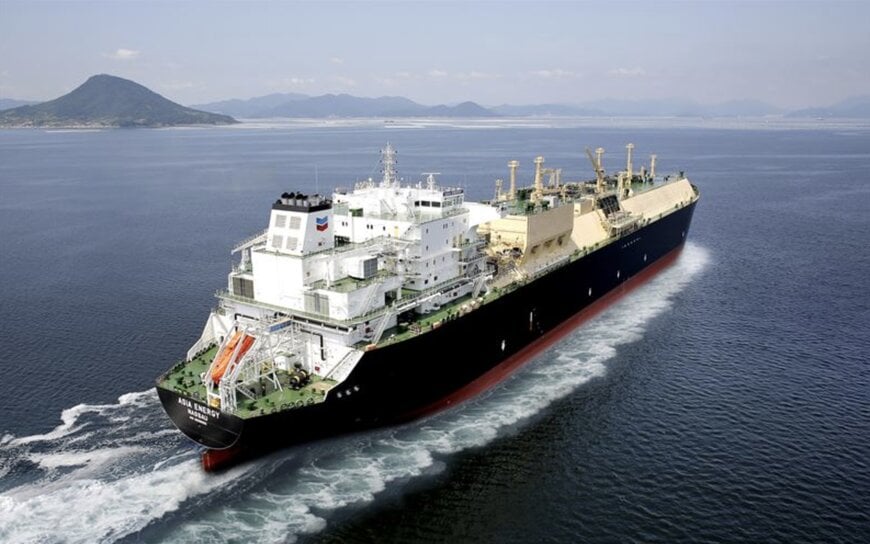
Liquefied natural gas (LNG) carriers equipped with four-stroke dual-fuel diesel-electric (DFDE) propulsion systems face mounting regulatory scrutiny over greenhouse gas intensity, driven primarily by the challenge of methane slip. In low-pressure Otto-cycle gas engines, small fractions of unburned methane can escape combustion during valve overlap or remain trapped in cooler cylinder crevices before being exhausted into the atmosphere. Because methane possesses a global warming potential significantly higher than carbon dioxide over both 20-year and 100-year time horizons, maritime environmental regulations—including the European Union's FuelEU Maritime standards, the EU Emissions Trading System (ETS), and International Maritime Organization (IMO) carbon-intensity metrics—penalize unburned hydrocarbon emissions. For vessel operators managing extensive fleets of existing DFDE gas carriers, replacing complete multi-megawatt engine installations is economically and technically unfeasible. Mitigating methane slip across existing fleets requires drop-in combustion retrofit architectures that optimize ignition dynamics and in-cylinder flame stability directly on in-service prime movers.
Spark Gas Conversion and Multi-Vessel Retrofit Program
To address methane emissions across operating maritime assets, technology group Wärtsilä completed the mechanical and combustion conversion of one engine on each of three LNG carriers operated by Chevron Transport Corporation. The engineering project transitions the targeted engines from standard dual-fuel (DF) operation to dedicated spark gas (SG) running.
Following the completion of the initial three vessels, Chevron and Wärtsilä plan to execute conversions on three additional LNG carriers through the remainder of the year and into the following year, expanding the retrofit initiative to a total of six ships. The project represents a cross-sector collaborative initiative between Chevron Shipping and Wärtsilä Marine focused on validating real-world operational modifications to cut fugitive greenhouse gas emissions from operating LNG-fueled vessels. Barbara Pickering, President of Chevron Shipping, noted that joint technical initiatives provide critical operational data and shared experience to decarbonize energy transport while maintaining transport reliability. Roger Holm, President of Wärtsilä Marine and Executive Vice President at Wärtsilä Corporation, emphasized that cross-industry collaboration remains essential for scaling field-tested technologies that lower maritime greenhouse gas profiles.
Combustion Optimization via Electrically Controlled Pre-Chamber Valves
The technical core of the upgrade modifies existing Wärtsilä 50DF engines into spark-ignited gas units, replacing conventional liquid diesel pilot injection with electrical spark ignition to initiate combustion. By eliminating diesel pilot fuel reliance, the engine operates on an optimized gas combustion cycle that enhances fuel efficiency while curtailing unburned hydrocarbon escape.
Key elements of the conversion architecture include:
- Pre-Combustion Chamber Control: The modification integrates an electrically controlled pre-combustion chamber valve that dynamically regulates fuel delivery into the ignition pocket, stabilizing ignition timing and lean-burn flame front propagation across variable engine loads.
- Methane Slip Reduction: On an IMO weighted E2-cycle average, the spark gas conversion reduces methane slip down to 1.1 percent of fuel consumption.
- Propulsion System Fleet Retrofittability: The conversion package is engineered for commercial vessels currently operating Wärtsilä 50DF engines within diesel-electric configurations, a powertrain configuration widely deployed across global LNG carrier fleets.
Drawing on three decades of marine gas technology development, Wärtsilä positions the spark gas conversion package alongside its dual-fuel portfolio, providing operators with a targeted retrofitting pathway to address vessel greenhouse gas compliance.
Additional Context
This section details technical specifications and competitive benchmarking not included in the original product announcement.
In marine propulsion engineering governed by the MARPOL Annex VI NOx Technical Code and ISO 8178 test standards, constant-speed auxiliary and diesel-electric propulsion generator sets are certified under the IMO E2 test cycle. This duty cycle measures weighted exhaust emissions across load steps of 100 percent, 75 percent, 50 percent, and 25 percent. The Wärtsilä 50DF platform—featuring a 500-millimeter cylinder bore and 580-millimeter piston stroke operating at 500 or 514 revolutions per minute—delivers approximately 950 to 975 kilowatts per cylinder. In four-stroke low-pressure gas engines running lean-burn Otto cycles, methane slip occurs predominantly at lower loads, where cooler combustion chamber wall temperatures and gas trapped within piston top-land crevices suppress complete flame propagation.
Regulatory frameworks are shifting from purely tank-to-wake carbon accounting toward comprehensive well-to-wake lifecycle greenhouse gas assessments. Under FuelEU Maritime regulations, four-stroke Otto-cycle engines are assigned a default methane slip accounting penalty of 3.1 percent of mass fuel consumption unless certified at lower levels through formal E2 or E3 testing protocols. Lowering methane emissions to 1.1 percent allows shipowners to avoid substantial non-compliance penalties under European compliance regimes and improves overall operational Carbon Intensity Indicator (CII) ratings.
Within the maritime decarbonization sector, Wärtsilä's spark gas conversion benchmarks against alternative methane-abatement solutions developed by engine designers such as MAN Energy Solutions and WinGD, as well as downstream exhaust gas aftertreatment systems. While modern two-stroke dual-fuel engines utilizing high-pressure Diesel cycles (such as MAN B&W ME-GI engines) introduce gas at hundreds of bars of pressure after top dead center to inherently limit slip below zero point two percent, they cannot be back-fitted into the medium-speed four-stroke generator configurations that dominate early-to-mid-generation DFDE gas carriers. Conversely, downstream methane oxidation catalysts (MOCs) remain constrained by narrow operating temperature windows, requiring exhaust heat well above 400 degrees Celsius that lean-burn four-stroke marine engines rarely sustain, while also remaining vulnerable to sulfur poisoning from trace lubricants. By replacing mechanical pilot fuel injectors with an electrically controlled pre-chamber valve and spark ignition, Wärtsilä suppresses methane slip at the combustion source without requiring secondary exhaust heating systems or extensive structural hull modifications.
Edited by Romila DSilva, Induportals Editor, with AI assistance.
