
www.technology4environment.com
17
'26
Written on Modified on
Wärtsilä to Supply Ammonia Engines for New LPG & Ammonia Carriers
Two new gas carriers will use Wärtsilä’s ammonia-fuelled engines and propulsion systems to reduce emissions and support future low-carbon shipping operations.
www.wartsila.com
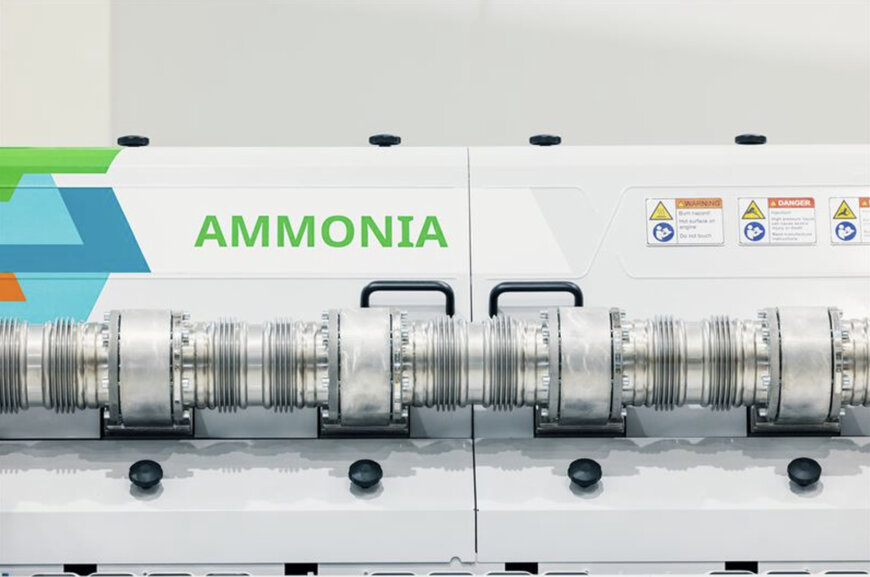
The maritime technology company Wärtsilä will supply its ammonia-fueled auxiliary engines and emissions control systems for two midsize liquid gas carrier vessels constructed at the Nantong CIMC Sinopacific Offshore & Engineering shipyard in Shanghai. This maritime decarbonization cooperation aims to integrate low-emission propulsion technologies into the global marine transport sector.
Ammonia combustion mechanics and emission reductions
The Wärtsilä 25 Ammonia engine functions as a 4-stroke marine power solution engineered specifically for carbon-free fuel operation. When utilizing sustainable ammonia as the primary fuel source, the engine mechanism achieves at least a 90 percent reduction in total greenhouse gas emissions compared to standard marine diesel counterparts. To manage exhaust output and regulate fuel delivery safely, the technical architecture incorporates a nitrogen oxide reducer and a specialized gas valve unit.
Vessel propulsion integration and capacity
The engine framework will be installed on two 51,350 cubic meter capacity LPG and liquid ammonia carrier vessels owned by Navigator Amon Shipping AS, a joint venture between Navigator Gas and Amon Maritime. Alongside the auxiliary engine, Wärtsilä will deliver a Controllable Pitch Propulsion system designed to optimize shaft line efficiency and maintain operational reliability under varying load conditions. Kaj S. Pilemand, Director of Vessel Operations at Navigator Gas, stated that implementing this technology will reduce the environmental footprint of the ships and ensure compliance with evolving regulatory standards.
Commercial deployment and net-zero targets
The contracts for the engines, nitrogen oxide reducer, and gas valve unit were secured in the second quarter of 2026, while the Controllable Pitch Propeller system order was booked in the third quarter of 2026. This hardware deployment supports the International Maritime Organization's net-zero-emissions target for 2050 by shifting vessel energy reliance from fossil fuels to alternative carbon-free carriers. Stefan Nysjö, Vice President of Power Supply at Wärtsilä Marine, noted that the project addresses the expanding demand for flexible propulsion systems capable of sustaining low-emission operating models across the shipping industry.
Additional Context:
This section details technical specifications and competitive benchmarking not included in the original product announcement
Within the maritime decarbonization sector, marine auxiliary engines are evaluated by their greenhouse gas reduction potential, power output, and alternative fuel compatibility. The Wärtsilä 25 Ammonia engine operates as a 4-stroke medium-speed power platform with an output range of 1.9 to 3.4 MW. Its primary competitor in the dual-fuel ammonia segment is MAN Energy Solutions, which develops 2-stroke ammonia engines, such as the B&W ME-LGIA platform, expected for shipyard delivery in 2026. While competing manufacturers focus extensively on low-speed 2-stroke primary propulsion engines for large ocean-going vessels, the Wärtsilä 25 targets auxiliary power generation and hybrid propulsion in midsize vessels. Both the 4-stroke Wärtsilä system and the 2-stroke competing platforms utilize a small percentage of pilot fuel for ignition but are engineered to achieve up to a 90 percent reduction in greenhouse gas emissions when maximizing the ammonia fuel ratio.
Edited by Natania Lyngdoh, Induportals editor, assisted by AI.
www.wartsila.com
