
www.technology4environment.com
26
'26
Written on Modified on
Material Consortium Targets Hydrogen Infrastructure Reliability and Component Durability
Wärtsilä and industrial partners launch the MatH2 consortium to develop safe, hydrogen-compatible materials and overcome embrittlement challenges in energy storage networks.
www.wartsila.com
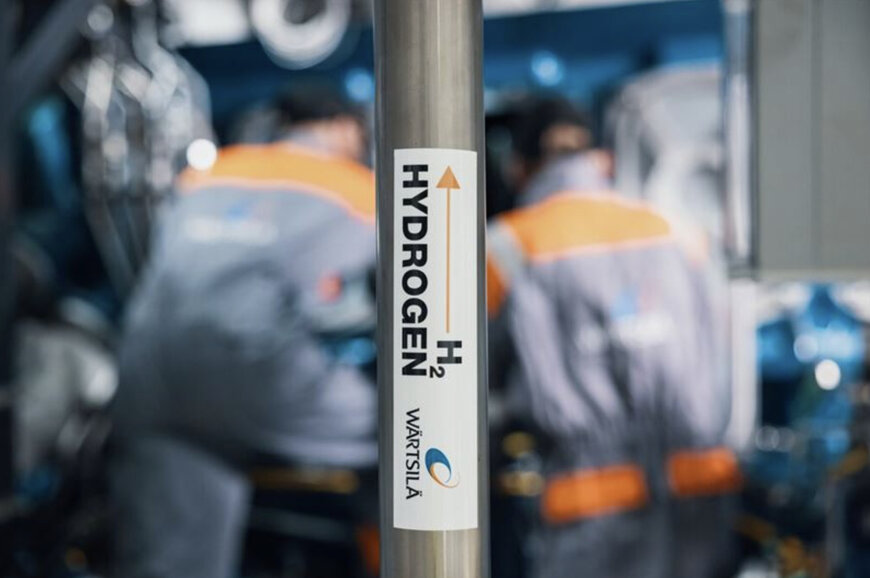
Wärtsilä and a network of research and industrial partners have launched MatH2, a joint consortium focused on developing and validating hydrogen-compatible materials. The initiative addresses the engineering limitations of hydrogen storage and transport by creating hardware components designed to resist material degradation across the global energy and manufacturing sectors.
Hydrogen Economy Scaling and Infrastructure Constraints
While global hydrogen demand reached 97 million tonnes in 2023, the transition to this alternative fuel source is limited by fundamental material compatibility issues. Hydrogen's low density and unique chemical properties cause significant degradation in standard metals through mechanisms such as hydrogen embrittlement and corrosion. These factors compromise the structural integrity of critical pipeline locations, storage tanks, and welds, making safe and cost-competitive scaling difficult. The MatH2 consortium aims to address these physical constraints by engineering a portfolio of affordable materials and components capable of withstanding prolonged exposure to hydrogen and related chemicals.
Industrial Collaboration and Hardware Development
Established under the Wise programme led by Wärtsilä and co-funded by Business Finland, the consortium is coordinated by the VTT Technical Research Centre of Finland. It includes ten partners spanning the value chain: EOS, Neste, Nordic Tank, Teknos, SSAB, Bumax, SP Stainless, VTT, and the University of Oulu. The objective is to provide technology developers with predictable material behavior metrics, ensuring the reliability of hydrogen-ready engines, pipeline reactors, and fuel processing systems. In June, Wärtsilä initiated validation of a 100 percent hydrogen engine designed to power the national electricity grid in Bermeo, Spain. This large-scale demonstration validated that engine-based power generation can operate entirely on hydrogen under real grid conditions, highlighting the immediate industrial requirement for durable, hydrogen-resistant components.
Economic Impact and Energy Transition Targets
By delivering hardware with enhanced durability and lower degradation metrics under hydrogen service, the initiative supports regional and global energy transition targets. Finland possesses abundant access to low-cost, carbon-free electricity and biogenic carbon dioxide, positioning the country to capitalize on hydrogen-derivative production. Advancements in material reliability through MatH2 can contribute to accelerating Finland’s hydrogen market, which is estimated to add up to 34 billion euros annually to the national GDP by 2035 and support over 60,000 jobs in technology development. Furthermore, these material innovations directly support the European Union’s objective of supplying 20 million tonnes of renewable hydrogen annually by 2030 by reducing structural risks and costs in expanding infrastructure.
Additional Context:
This section details technical specifications and competitive benchmarking not included in the original product announcement
Within the materials engineering sector, hydrogen compatibility is strictly benchmarked using standardized evaluation protocols, such as the ISO 11114-4 disc method. This standard assesses the susceptibility of metals to hydrogen embrittlement by comparing the rupture pressure of a material sample exposed to helium against its rupture pressure when exposed to hydrogen gas. A lower ratio between these two pressures indicates a higher resistance to embrittlement. Consortiums and material manufacturers must validate their alloys and protective coatings against these quantifiable metrics to certify components for high-pressure storage and transport, differentiating their hardware based on empirical structural integrity rather than theoretical durability.
Edited by Natania Lyngdoh, Induportals editor, assisted by AI.
www.wartsila.com
