
www.technology4environment.com
20
'26
Written on Modified on
Waste-to-Energy Infrastructure for Municipal Solid Waste & Resource Recovery
Kanadevia Inova presents its Waste-to-X and carbon capture infrastructure at COP31 to reduce landfill methane and stabilize urban grids.
kanadevia-inova.com
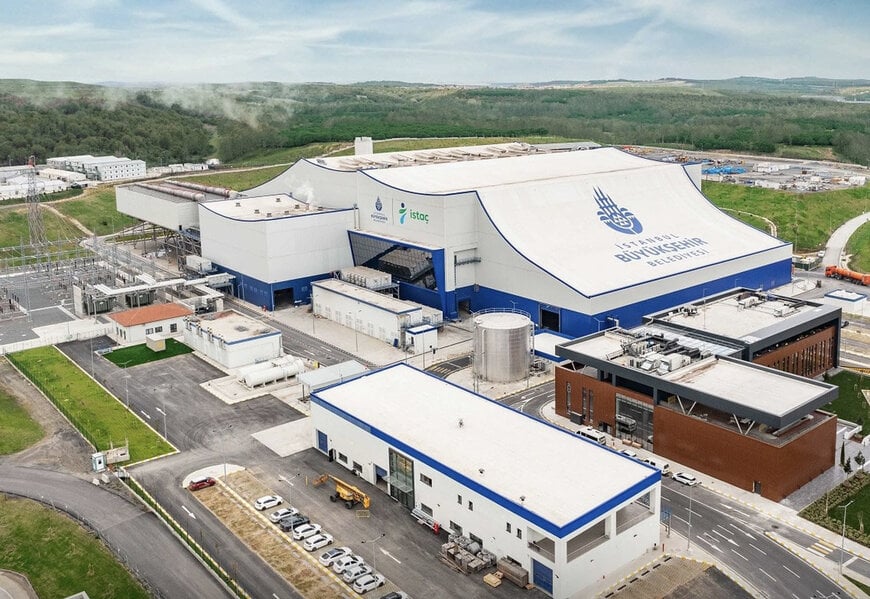
Rapid urban expansion and escalating municipal solid waste volumes pose severe ecological challenges, as conventional landfilling generates potent fugitive methane emissions and occupies critical land resources. To divert non-recyclable fractions from disposal sites while generating baseload power, integrated thermal and biological waste treatment technologies convert residual material into secondary energy and reusable mineral resources across metropolitan environments.
Kanadevia Inova, an international greentech provider specializing in energy transition and circular economy solutions, will participate in the United Nations Climate Change Conference (COP31), scheduled from 9 to 20 November 2026 in Antalya, Türkiye. The organization plans to present its engineering portfolio across Waste-to-X thermal conversion, anaerobic digestion, renewable gas upgrading, and post-combustion carbon capture to demonstrate scalable, bankable infrastructure for international municipal authorities.
Thermal Conversion Principles and Grid-Scale Energy Recovery
Industrial Waste-to-X architecture processes residual municipal solid waste (MSW) through controlled thermal treatment, typically utilizing reciprocating grate combustion systems. Waste feedstocks undergo sequential drying, ignition, and high-temperature combustion on inclined grates, where primary and secondary combustion air volumes are precisely metered to ensure complete oxidation and comply with strict emission thresholds. The thermal energy released during combustion converts boiler feed water into high-pressure superheated steam, which expands across multi-stage steam turbine-generator sets to supply electrical power or district thermal energy.
Beyond electrical generation, modern thermal treatment lines recover bottom ash and metal fractions from the combustion residue. Advanced mechanical separation plants extract ferrous and non-ferrous metals from bottom ash, returning purified metals to industrial supply streams and conditioning mineral aggregate fractions for secondary civil engineering applications. High-efficiency multi-stage flue gas treatment systems—combining dry, semi-dry, or wet scrubbers with fabric baghouse filters—neutralize acid gases, capture heavy metals, and strip nitrogen oxides via selective non-catalytic or catalytic reduction.
Operational Benchmark: The Istanbul Waste-to-Energy Facility
The operational viability of large-scale thermal processing is demonstrated by the Istanbul Waste-to-Energy facility in Türkiye, engineered and constructed by Kanadevia Inova. Operating as Europe's largest municipal solid waste-to-energy plant, the multi-line installation processes approximately 1,000,000 tonnes of municipal solid waste annually, accounting for roughly 15 percent of Istanbul's total municipal waste generation.
By thermally processing residual municipal waste streams rather than routing them to disposal sites, the facility prevents fugitive methane formation associated with anaerobic decomposition in landfills. The high-pressure steam cycle generates approximately 77 MW of electricity for the regional transmission grid. Delegates attending COP31 who transit through Istanbul will have access to organized technical site tours of the plant, subject to operational conditions and capacity.
COP31 Technical Program and Industry Panels
Throughout the conference in Antalya, Kanadevia Inova leadership—including CEO Bruno-Frédéric Baudouin, Executive Vice President of Business Development Fabio Dinale, and Vice President Regional Growth Group Touffik Fredj—will participate in several technical sessions, roundtables, and policy panels.
At the Sustainable Innovation Forum in Belek on Tuesday, 10 November 2026, the executive delegation will participate in the Climate Action Roundtable from 10:00 to 11:00 on closing investment transactions for advanced waste infrastructure, followed by a panel from 14:55 to 15:35 on urban waste and energy integration. Later that evening, from 18:30 to 20:00, the company will join the Renewable Energy Association UNFCCC Official Side Event in the Blue Zone to address circular urban infrastructure.
Subsequent Blue Zone sessions hosted by the Renewable Energy Association will examine resilient city design on Wednesday, 11 November from 10:30 to 11:30. On Thursday, 12 November, back-to-back roundtables will address advanced waste infrastructure in emerging economies from 10:30 to 11:30 and methane reduction methodologies within circular waste systems from 16:30 to 17:30.
Parent entity Kanadevia Corporation will host technical seminars at the Japan Pavilion. On Monday, 9 November from 15:45 to 16:30, Junichi Yamamoto, Executive Officer of Carbon Neutral Solutions, will discuss urban resilience. Michi Kuwahara, President and Group CEO of Kanadevia Corporation, will participate in a seminar on net-zero circular initiatives on Monday, 16 November from 14:00 to 15:15, and an accelerator panel on decarbonization in the built environment on Wednesday, 18 November from 11:45 to 13:00.
Additional Context:
This section details technical specifications and competitive benchmarking not included in the original product announcement.
Municipal waste management infrastructure is evaluated against European Union Best Available Techniques (BAT) reference documents (BREF) under the Industrial Emissions Directive 2010/75/EU, which mandate stringent emission limits for particulate matter, sulfur dioxide, hydrogen chloride, nitrogen oxides, and dioxins/furans. Modern moving grate combustion systems maintain gross electrical energy recovery efficiencies typically between 20 and 32 percent, while combined heat and power (CHP) configurations achieve total fuel utilization rates surpassing 80 percent by routing low-pressure exhaust steam to municipal district heating networks.
In baseline industrial benchmarks, thermal waste treatment offers distinct operating characteristics compared to direct landfilling with methane collection. While well-managed municipal landfills capture between 50 and 85 percent of generated methane over multi-decade degradation periods, moving grate thermal treatment converts biogenic and fossil carbon fractions instantaneously in high-temperature zones (>850 degrees Celsius at 2-second flue gas residence times), precluding the generation of methane, which carries a 28 to 36-fold higher global warming potential over a 100-year timescale.
To address the biogenic and fossil carbon dioxide generated in combustion exhaust, post-combustion carbon capture systems utilizing liquid amine scrubbing—such as monoethanolamine (MEA) or proprietary formulated solvents—are increasingly deployed at the tail end of the flue gas train. These absorption-desorption loops strip up to 90 to 95 percent of flue gas carbon dioxide, which is then dried, purified, and compressed to dense phase or liquefied to meet industrial purity criteria, including International Society of Beverage Technologists (ISBT) and European Industrial Gases Association (EIGA) standards for beverage or chemical synthesis utilization.
Edited by Natania Lyngdoh, Induportals editor, with AI assistance.
www.kanadevia-inova.com
