
www.technology4environment.com
28
'26
Written on Modified on
DLR Expands WiValdi Research Wind Park With Modular OPUS 3
A modular research turbine bridges laboratory testing and commercial wind energy systems to accelerate hardware and control algorithm validation.
www.dlr.de
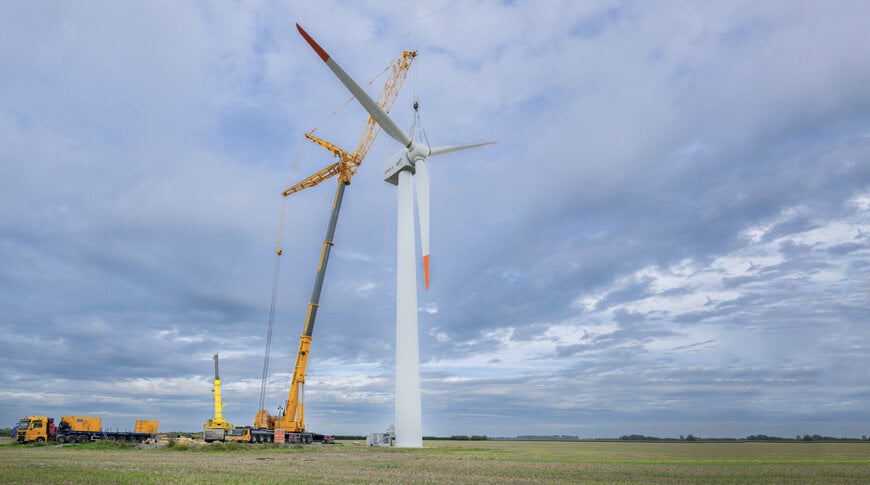
The German Aerospace Center has completed assembly of OPUS 3 at the WiValdi wind energy research park in Krummendeich, Lower Saxony. The modular installation functions as an open-architecture experimental platform to validate components, structural configurations, and operational control strategies under real-world atmospheric conditions across the renewable power generation sector.
Turbine Dimensions and Modular Engineering Architecture
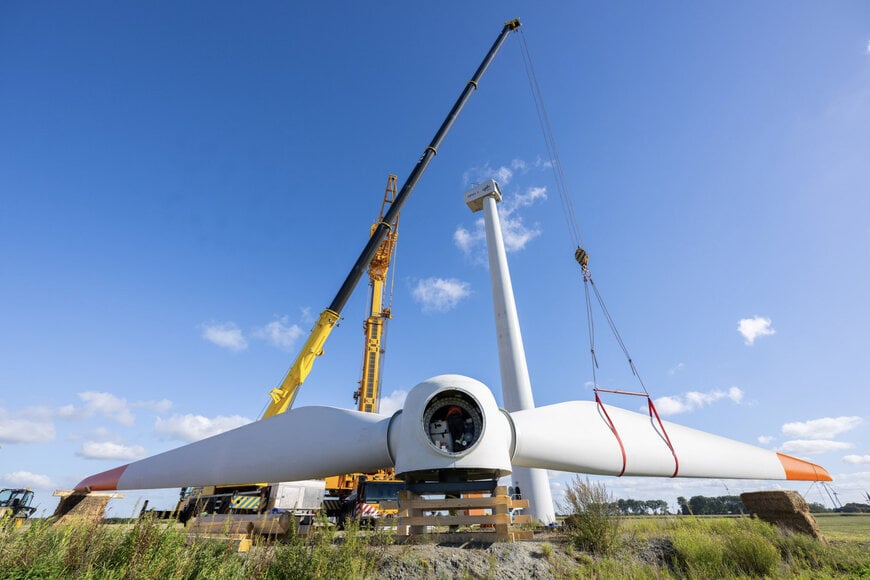
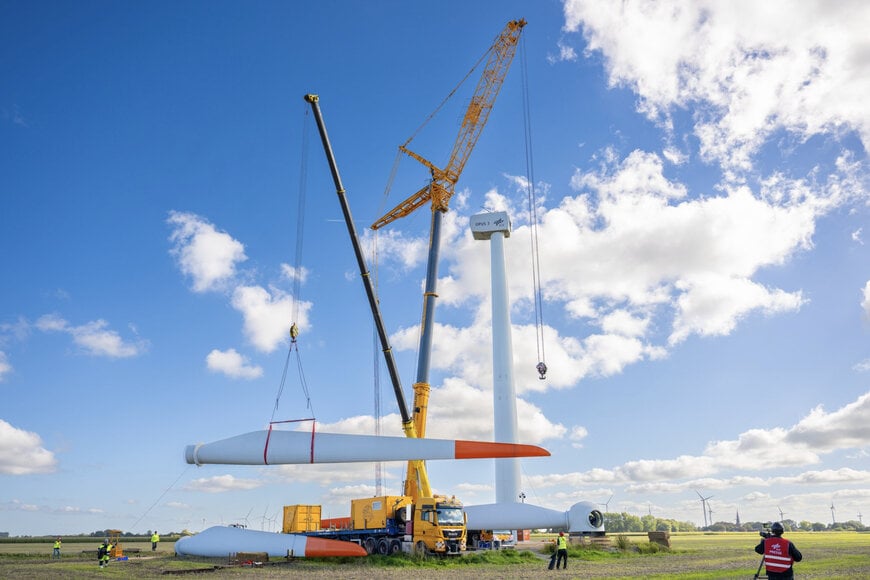
OPUS 3 operates at a rated generating capacity of 500 kilowatts, supported by a two-section tubular tower with an overall weight of 80 metric tons. The structure features a hub height of 50 meters and a rotor diameter of 50 meters, housing three 25-meter rotor blades weighing 2.5 metric tons each attached to a 15-ton hub. The drivetrain and power generation systems reside in a 30-ton nacelle.
Funding of approximately six million euros from the Federal Ministry for Economic Affairs and Energy enabled the custom design and construction of the unit. Unlike mass-produced commercial wind turbines with closed proprietary software, the modular testbed permits researchers to swap drivetrains, test altered gearbox components, integrate novel pitch control mechanisms, and deploy experimental aerodynamic profiles within regulatory safety margins.
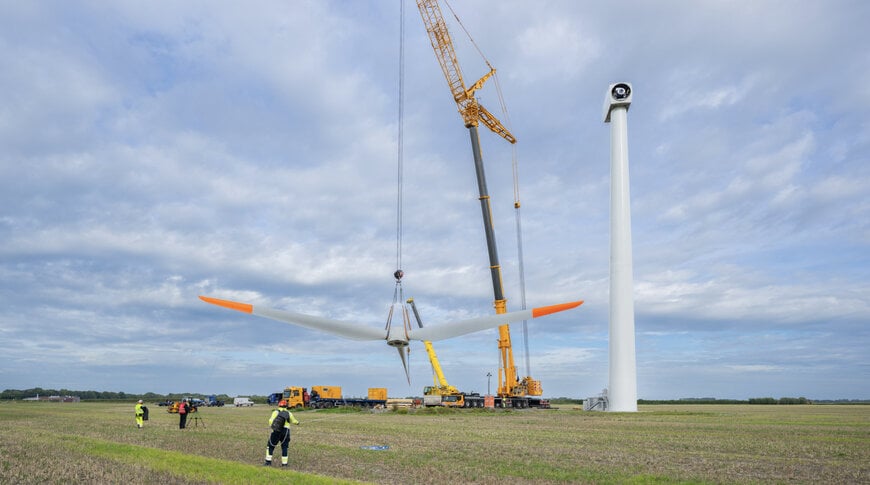
Experimental Aerodynamic Control and Sensor Instrumentation
The unit provides an empirical validation stage between multibody digital simulations, indoor test benches, and multi-megawatt offshore or onshore turbines. Lukas Firmhofer, project lead for OPUS 3, indicated that the installation fills an essential intermediary role by enabling technology trials in atmospheric operating regimes without the commercial liabilities of utility-scale power assets.
Structural and aerodynamic data acquisition started during the assembly phase prior to nacelle installation. Sensors measured the vibration modes and natural frequency responses of the freestanding tower exposed to coastal wind loads. The resulting baseline data validates dynamic loading models to mitigate vibration risks during the erection of taller wind towers.
System Integration Across the WiValdi Park
Commissioning procedures continue through the end of 2026, leading toward standard scientific operations in early 2027. OPUS 3 operates in tandem with OPUS 1 and OPUS 2, two multi-megawatt commercial-class research turbines deployed on site in 2023.
The research network includes 2000 sensors arrayed across turbine foundations, towers, blades, ground stations, and meteorological masts. The instrumentation captures wake interactions, aeroelastic deflections, turbulence dispersion, and acoustic profiles to support future testing of flexible, load-adaptive blades.
Additional Context:
This section details technical specifications and competitive benchmarking not included in the original product announcement
Field-scale modular wind turbines represent a dedicated class of open-architecture research platforms used to evaluate full-scale aeromechanical loads, wake steering, and advanced blade physics. Comparable experimental infrastructure includes the National Renewable Energy Laboratory Flatirons Campus in the United States, which operates the 1.5-megawatt GE Cart3 and modular test turbines, as well as the Technical University of Denmark test facility at Høvsøre.
While utility test sites frequently evaluate off-the-shelf turbines with fixed controller configurations, dedicated research assets utilize fully exposed supervisory control and data acquisition systems and customizable blade root attachments. Standard commercial multi-megawatt installations operate with tip-speed ratios between 7 and 9 and standard supervisory loops that prioritize continuous grid stability over structural stress probing. In contrast, intermediate-scale testbeds like OPUS 3 permit operational testing at extreme collective and individual blade pitch angles, boundary-layer load shedding, and direct validation of aeroelastic solvers such as FAST and HAWC2 under unconstrained open-loop and closed-loop control conditions.
Edited by Natania Lyngdoh, Induportals editor, assisted by AI.
www.dlr.com
