
www.technology4environment.com
05
'25
Written on Modified on
How DLR and ESA Are Setting a New Benchmark in Global Forest Biomass Mapping
DLR's research aircraft and ESA's Biomass satellite performed simultaneous P-band radar flights over the rainforest to calibrate and validate forest biomass measurements.
www.dlr.de
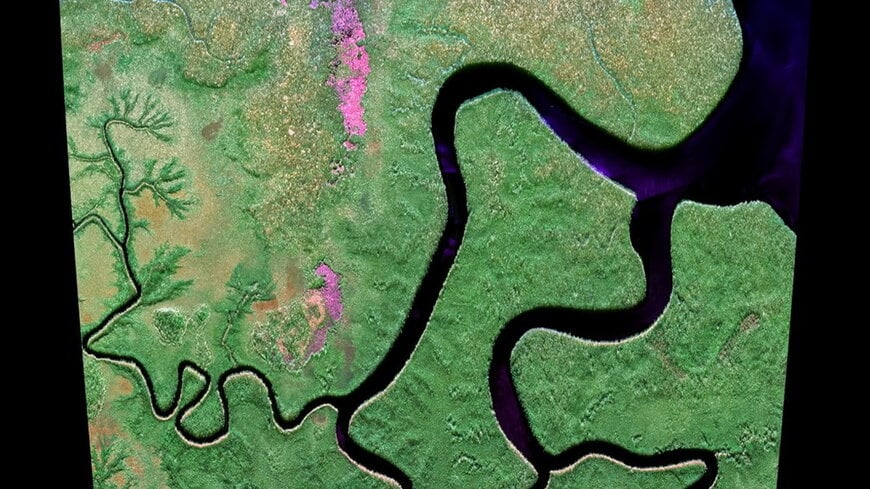
In recent weeks, the German Aerospace Center (DLR) has carried out a tightly coordinated airborne radar campaign over Gabon to validate and fine-tune ESA’s Biomass satellite—the first radar mission to use long-wavelength P-band technology for global forest mapping. By flying its Dornier DO 228-212 D-CFFU along the satellite’s orbital track and imaging the same rainforest areas within minutes of each satellite pass, DLR is generating reference data designed to push calibration accuracy beyond what has been achievable with earlier missions.
Why Biomass Needs Precise Calibration
ESA’s Biomass mission is designed to deliver the first global map of forest biomass using radar. This data is essential for improving estimates of carbon stored in forests and for refining climate models that rely on accurate assessments of CO₂ absorption and emissions from deforestation. Because P-band radar penetrates vegetation far more deeply than shorter-wavelength systems, precise calibration is critical to ensure confidence in the satellite’s global measurements.
Airborne Radar as a Competitive Advantage
DLR’s F-SAR sensor, installed on the DO 228-212 and already proven in tropical environments during campaigns in 2016 and 2023, offers reference imaging capabilities that few organizations worldwide can match. Its ability to replicate the satellite’s viewing geometry and collect data immediately after an overpass provides uniquely high-quality calibration material. Ahead of deployment, the airborne system was checked and adjusted at DLR’s dedicated calibration field near Oberpfaffenhofen, where large, precisely surveyed radar reflectors support sensor verification.
Why Gabon Is the Ideal Testbed
With rainforests covering nearly 90 percent of its territory, Gabon provides some of the most suitable conditions in the world for validating long-wavelength radar observations. By revisiting areas previously surveyed, researchers can directly measure changes in forest biomass and structure, enabling long-term monitoring of one of the planet’s most carbon-rich ecosystems.
High-Fidelity Radar for Deep Forest Insights
Biomass is the first radar satellite operating in the 70-centimetre P-band range and the first to apply polarimetric tomography at a global scale. This combination allows the system to reconstruct multiple layers of forest structure, from canopy to ground level. When matched with airborne F-SAR data, these measurements support unprecedented accuracy in assessing the composition and evolution of tropical forests.
Moving Into the Scientific Phase
With the flight campaign completed, the DLR Microwaves and Radar Institute has begun processing and comparing the airborne data with synchronous satellite observations. The results will guide final tuning of the Biomass radar system so it can deliver consistently reliable global datasets throughout its mission lifetime. The campaign was conducted in collaboration with the Gabonese space agency AGEOS and on behalf of ESA.
Delivering Data That Elevate Global Climate Monitoring
As climate models increasingly depend on precise forest-related carbon estimates, the coordinated DLR–ESA effort in Gabon marks a pivotal step toward providing the global scientific community with the most accurate biomass data ever produced from space. The combination of P-band radar, airborne reference measurements, and long-term monitoring positions the Biomass mission at the forefront of Earth observation technologies for climate protection.
www.dlr.de
