
www.technology4environment.com
07
'26
Written on Modified on
Alfa Laval Supplies Cooling Equipment for Onuba H2 Electrolyzer Project
Alfa Laval has been selected by Moeve to supply 60 heat exchangers for the Onuba H2 green hydrogen project in Southern Europe.
www.alfalaval.com
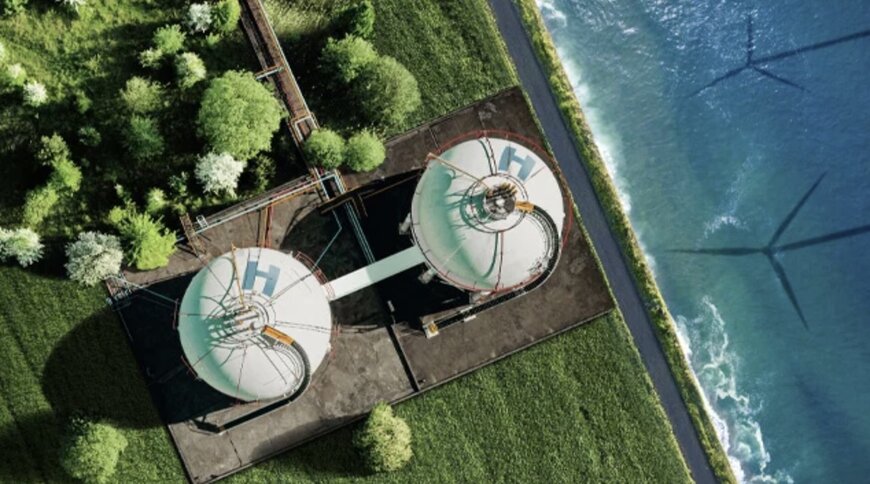
Alfa Laval will supply specialized heat transfer equipment to energy company Moeve for the Onuba H2 project, located at the La Rábida Energy Park in Huelva, Spain. Serving as an industrial anchor for the Andalusian Green Hydrogen Valley, the installation will function as an electrolyzer plant targeted at decarbonizing hard-to-abate transport and industrial sectors.
Electrolysis Capacity and Hydrogen Output
The Onuba H2 facility is engineered with an initial electrolysis capacity of 300 MW, with design provisions to scale up by an additional 105 MW. At full planned operation, the installation is projected to produce 45,000 tonnes of renewable green hydrogen annually.
The wider Andalusian Green Hydrogen Valley has received designation from the European Commission as a Project of Common Interest (PCI), supporting its eligibility for public development grants and accelerated financing frameworks across the European Union. The production facility leverages local renewable generation assets, geographical connectivity, and industrial infrastructure to supply hydrogen as an energy carrier in alignment with European decarbonization goals.
Cooling Systems and Scope of Supply
The delivery package encompasses 60 Alfa Laval heat exchangers dedicated to maintaining internal process temperatures across the plant. The cooling infrastructure covers balance of plant (BoP) cooling circuits, direct electrolyzer stack thermal management, and gas cooling stages. These systems stabilize process operating conditions to support conversion efficiency, mechanical reliability, and operational safety during multi-megawatt hydrogen generation.
Additional Context
This section details technical specifications not included in the original news release.
Thermal management in large-scale water electrolysis systems—whether utilizing alkaline (AEL) or proton exchange membrane (PEM) cell architectures—is vital for mitigating cell degradation and avoiding thermal runaway, as approximately 20 to 30 percent of the electrical input energy is rejected as low-grade waste heat. Multi-megawatt balance-of-plant cooling networks typically utilize gasketed or semi-welded plate heat exchangers configured with high-grade titanium or duplex stainless steel plates to withstand demineralized water and corrosive electrolyte solutions, such as 20 to 30 percent potassium hydroxide (KOH). Product gas cooling circuits must drop wet raw hydrogen and oxygen gas stream temperatures below dew points at discharge pressures typically ranging between 10 to 30 bar, facilitating downstream moisture condensation and mechanical separation prior to deoxygenation and pressure swing adsorption (PSA) polishing stages that achieve 99.999% purity levels. Maintaining tight temperature control bands within ±2°C across individual cell stack manifolds protects ion-exchange membranes against differential thermal expansion and micro-perforations during dynamic load fluctuations driven by intermittent renewable generation profiles.
Edited by Romila DSilva, Induportals Editor, with AI assistance.
www.alfalaval.com
