
www.technology4environment.com
14
'26
Written on Modified on
Inline Optical Monitoring for Alternative Fuels in Cement Production
ZEISS Spectroscopy, ZEISS Ventures, and Corporate Research deployed an optical inline analysis system to stabilize rotary kiln combustion in cement manufacturing.
www.zeiss.com
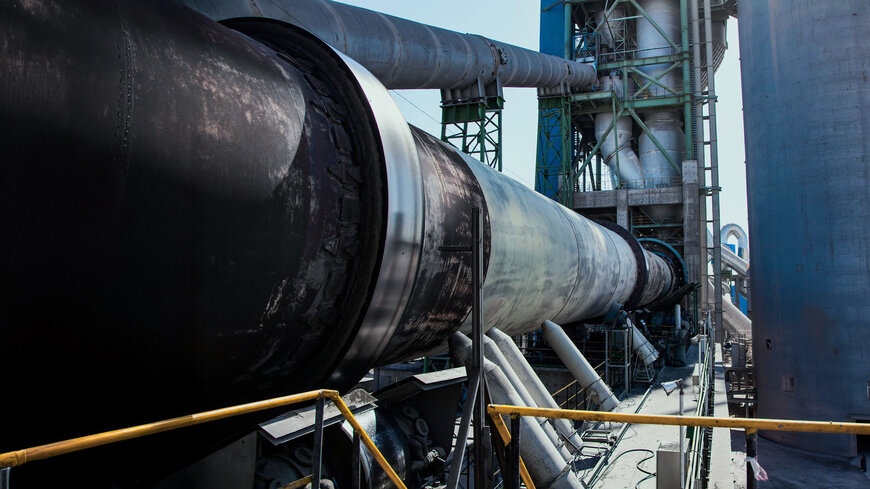
ZEISS Spectroscopy partnered with ZEISS Ventures and Corporate Research to deploy an inline monitoring system for real-time quality control of secondary fuels in cement manufacturing. The technical collaboration addresses combustion instability caused by composition fluctuations in alternative fuel streams.
Industrial Challenge and Cross-Unit Engineering
Cement clinker synthesis requires sustained high-temperature thermal profiles and constant flame geometry in rotary kilns. Replacing fossil fuels with refuse-derived fuel (RDF) and solid recovered fuel (SRF) introduces operational volatility due to continuous variations in fuel composition, moisture levels, and thermal yield.
To resolve this integration challenge, internal ZEISS units combined domain capabilities initiated during the internal Green Business Challenge. Corporate Research and ZEISS Ventures contributed advanced research methodologies and venture modeling, while ZEISS Spectroscopy engineered the optical sensor hardware into an industrial measurement architecture.
Technical Architecture and Parameter Detection
The system adapts near-infrared (NIR) reflection technology from established Corona sensor platforms for harsh operational environments. The instrumentation installs directly over conveying systems to perform non-contact, continuous analysis within active material flows. The optical sensor records NIR spectral reflectance from heterogeneous solid particles to calculate specific chemical and physical values simultaneously:
- Lower heating value: Determines real-time energy input for primary burner control.
- Moisture fraction: Provides parameters to calculate required drying energy and mass balance.
- Chlorine concentration: Monitors corrosive and clogging halogen compounds to prevent bypass accumulation and refractory degradation.
Operationally, the active RDF and SRF material stream on the conveyor is continuously measured via non-contact optical scanning. The extracted values for calorific yield, moisture, and chlorine are then transmitted directly into the plant industrial automation networks. This continuous data transfer enables closed-loop, dynamic adjustments to fuel feeding rates and air distribution before thermal imbalances occur in the kiln.
Operational Implementation and Demonstration
The monitoring hardware is engineered for high-dust, variable-temperature cement plant environments. Real-time parameter extraction eliminates time delays associated with offline laboratory sampling, allowing process operators to increase alternative fuel substitution rates while maintaining clinker quality and kiln thermal equilibrium.
Edited by Evgeny Churilov, Induportals Media - Adapted by AI.
www.zeiss.com
Operational Implementation and Demonstration
The monitoring hardware is engineered for high-dust, variable-temperature cement plant environments. Real-time parameter extraction eliminates time delays associated with offline laboratory sampling, allowing process operators to increase alternative fuel substitution rates while maintaining clinker quality and kiln thermal equilibrium.
Edited by Evgeny Churilov, Induportals Media - Adapted by AI.
www.zeiss.com
