
www.technology4environment.com
13
'26
Written on Modified on
KBR Selected for ORNX Green Ammonia Pre-FEED Study in Morocco
KBR provides technology licensing and Pre-FEED engineering services for an ORNX Green Hydrogen low-carbon ammonia project in Laâyoune, Morocco.
www.kbr.com
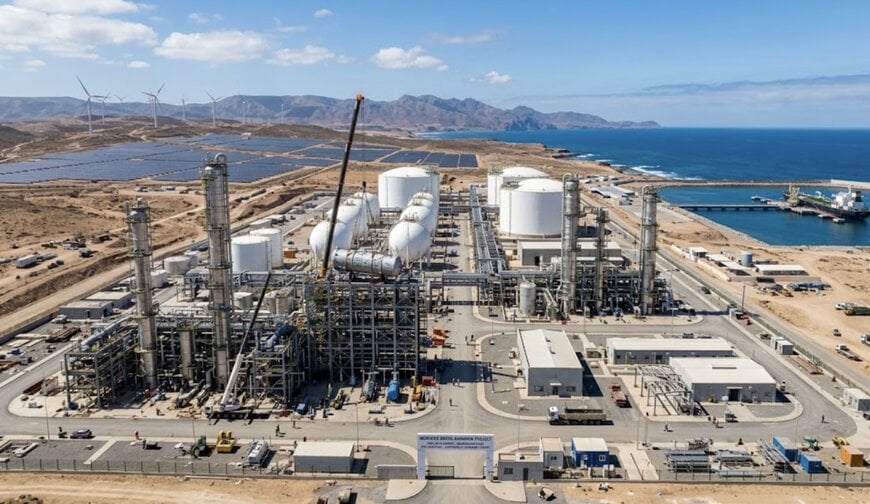
KBR has been selected by ORNX Green Hydrogen to perform pre-front-end engineering design (Pre-FEED) services and provide technology licensing for a low-cost green ammonia facility located in the Laâyoune region of Morocco. Supported by grant funding from the U.S. Trade and Development Agency (USTDA), the integrated development will combine renewable power generation, hydrogen production, and ammonia synthesis to establish an export-oriented supply of clean fuels.
Engineering Scope and Production Capacity
The planned facility is expected to utilize approximately 900 MW of electrolyzer capacity to produce an estimated 560,000 metric tons of low-cost ammonia per year. The plant configuration relies on local renewable energy resources and regional port access to support distribution to global markets across the fertilizer, maritime, and industrial sectors. KBR assisted ORNX during the USTDA grant application process that secured funding for the initial engineering phase.
Strategic Integration with Morocco's Energy Goals
The ORNX initiative supports national energy goals in Morocco, where hydrogen and synthetic derivatives have been designated key drivers for economic growth. The platform establishes a scalable footprint intended to meet international demand for low-carbon chemical feedstocks while driving continued investment into regional infrastructure.
Additional Context
This section details technical specifications not included in the original news release.
Green ammonia production utilizes water electrolysis to split water into hydrogen and oxygen, followed by nitrogen separation via an Air Separation Unit (ASU). The resulting high-purity hydrogen and nitrogen feeds are pressurized and introduced to the Haber-Bosch synthesis loop, operating at elevated pressures (typically between 100 bar and 250 bar) and temperatures ranging from 400°C to 500°C over an iron-based catalyst to synthesize anhydrous ammonia.
To manage intermittent power input from solar and wind resources without destabilizing thermochemical synthesis loops, large-scale green ammonia facilities employ dynamic process control architectures, high-pressure gaseous hydrogen buffer storage tanks, or variable-load electrolysis systems (such as Proton Exchange Membrane or Alkaline Electrolyzer stacks). Modern licensable ammonia synthesis loops integrate heat recovery exchangers, refrigeration purge loops, and closed-loop condenser systems to minimize parasitic energy consumption and maintain optimal synthesis loop stoichiometry.
Edited by Romila DSilva, Induportals Editor, with AI assistance.
www.kbr.com
