
www.technology4environment.com
24
'26
Written on Modified on
KBR Launches Polymer Dissolution Technology for Thermoplastic Recycling
Developed by ReVentas, KBR’s PDT addresses key challenges in recycling by enabling fast and efficient polymer dissolution without the need for proprietary solvents or severe operating conditions.
www.kbr.com
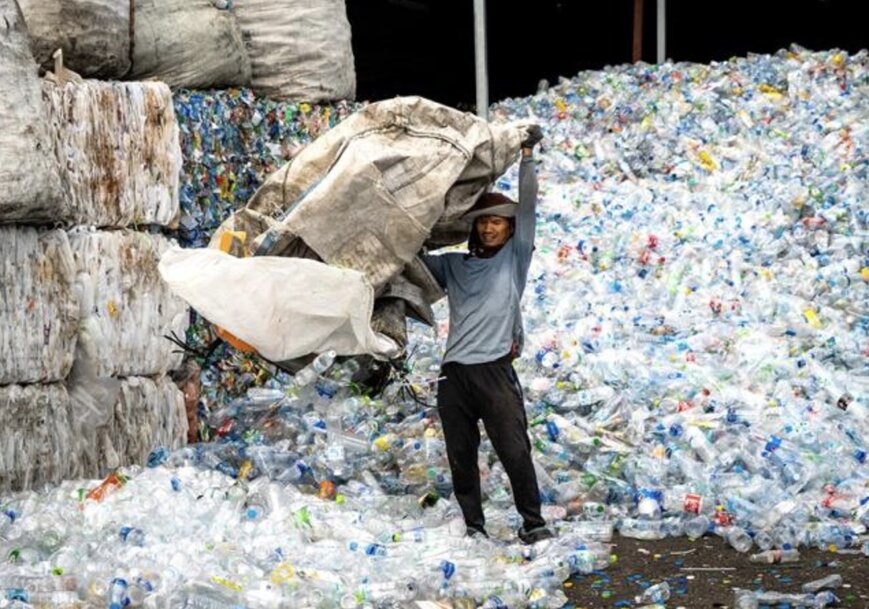
KBR has launched a patented polymer dissolution technology (PDT) designed for purifying and recycling polyethylene (PE) and polypropylene (PP) to address imbalances between global plastic consumption and existing recycling capacities. Comprising the largest share of global plastic production—predominantly utilized within the packaging and fast-moving consumer goods (FMCG) industries—thermoplastics can be melted, reshaped, and reused across multiple processing cycles.
Polymer Dissolution and Regulatory Alignment
Developed by ReVentas, KBR’s PDT facilitates the dissolution of target polymers without requiring proprietary solvents or severe operating conditions. The platform produces high-quality, virgin-like polymers from difficult-to-recycle post-consumer plastics, maintaining an environmental footprint comparable to standard mechanical recycling methods.
The physical process uses a non-proprietary solvent that remains permissible within defined thresholds for food packaging applications. This baseline ensures the technology satisfies the European Food Safety Authority (EFSA) Novel Technology requirements, eliminating traditional regulatory barriers for downstream food-contact, cosmetic, and medical applications.
Feedstock Versatility and Operational Logistics
The dissolution process is complementary to both mechanical and chemical plastic recycling frameworks, offering distinct performance and economic characteristics:
- Feedstock Processing: The system processes both PE and PP feedstocks simultaneously, accommodating flexible films and rigid plastics.
- Chain Preservation: The physical separation methodology preserves the underlying polymer chains to achieve high product yields without chemical cracking.
- Traceability Compliance: Because the process is physical rather than chemical, it enables straightforward material traceability, supporting audit verification and mass balance accounting requirements.
- Cost Structure: The use of mild operating conditions and non-proprietary solvents reduces baseline capital requirements and ongoing operating costs compared to high-temperature pyrolytic chemical recycling.
Rising global plastic demand combined with limited infrastructure capacity and tightening environmental regulations have expanded the supply gap for premium recycled polymers. ReVentas’ polymer recycling technology expands KBR's advanced recycling portfolio, which includes Hydro-PRT® for mixed or contaminated waste plastics and TyreNovaSM for end-of-life tire recycling workflows.
Additional Context
This section details technical specifications not included in the original news release.
Polymer dissolution technology (PDT), often referred to as solvent-based purification or dissolution-precipitation recycling, is a physical purification process that contrasts with mechanical recycling and chemical recycling (such as pyrolysis or depolymerization). Mechanical recycling utilizes shredded sorting, washing, and extrusion re-granulation; however, it fails to remove deeply embedded colorants, deodorants, or legacy chemical additives, which degrades the mechanical performance and limits food-grade applications. Chemical recycling breaks the polymer backbone down into basic hydrocarbon monomers via thermal cracking, which requires high energy input and complex multi-stage repolymerization plants.
PDT isolates target thermoplastics by leveraging selective thermodynamic solubility. Polyethylene (PE) and polypropylene (PP) are polyolefins characterized by high chemical resistance and non-polar molecular structures, making them insoluble in water and most standard organic solvents at room temperature.
During the PDT cycle, post-consumer plastic flakes are immersed in a common hydrocarbon solvent—such as specific alkanes or cycloalkanes—and heated under mild thermal regimes, typically between 100°C and 140°C, under moderate pressure. At these specific temperatures, the solvent molecules penetrate the amorphous and crystalline regions of the polyolefins, overcoming the intermolecular Van der Waals forces to dissolve the polymer chains completely into a liquid solution.
Because the dissolution is purely physical, the long covalent carbon-carbon backbones of the PE or PP remain intact, preventing the molecular weight degradation associated with mechanical extrusion or thermal cracking.
Once the target polymers are dissolved into the solvent matrix, solid contaminants—including insoluble multilayer barrier polymers (such as polyethylene terephthalate (PET) or polyamides), paper labels, mineral fillers, and aluminum foils—are mechanically filtered out using micro-filtration screens.
The dissolved polymer solution then undergoes a precipitation stage, typically achieved by lowering the temperature or introducing a non-solvent anti-solvent agent. This shifts the thermodynamic equilibrium, causing the purified polyethylene or polypropylene to precipitate out of the solution as a clean, virgin-like solid polymer matrix.
The residual solvent is vaporized, condensed, and recycled back into the primary dissolution loop, achieving high chemical recovery rates and minimizing volatile organic compound emissions.
Edited by Romila DSilva, Induportals Editor, with AI assistance.
Additional Context
This section details technical specifications not included in the original news release.
Polymer dissolution technology (PDT), often referred to as solvent-based purification or dissolution-precipitation recycling, is a physical purification process that contrasts with mechanical recycling and chemical recycling (such as pyrolysis or depolymerization). Mechanical recycling utilizes shredded sorting, washing, and extrusion re-granulation; however, it fails to remove deeply embedded colorants, deodorants, or legacy chemical additives, which degrades the mechanical performance and limits food-grade applications. Chemical recycling breaks the polymer backbone down into basic hydrocarbon monomers via thermal cracking, which requires high energy input and complex multi-stage repolymerization plants.
PDT isolates target thermoplastics by leveraging selective thermodynamic solubility. Polyethylene (PE) and polypropylene (PP) are polyolefins characterized by high chemical resistance and non-polar molecular structures, making them insoluble in water and most standard organic solvents at room temperature.
During the PDT cycle, post-consumer plastic flakes are immersed in a common hydrocarbon solvent—such as specific alkanes or cycloalkanes—and heated under mild thermal regimes, typically between 100°C and 140°C, under moderate pressure. At these specific temperatures, the solvent molecules penetrate the amorphous and crystalline regions of the polyolefins, overcoming the intermolecular Van der Waals forces to dissolve the polymer chains completely into a liquid solution.
Because the dissolution is purely physical, the long covalent carbon-carbon backbones of the PE or PP remain intact, preventing the molecular weight degradation associated with mechanical extrusion or thermal cracking.
Once the target polymers are dissolved into the solvent matrix, solid contaminants—including insoluble multilayer barrier polymers (such as polyethylene terephthalate (PET) or polyamides), paper labels, mineral fillers, and aluminum foils—are mechanically filtered out using micro-filtration screens.
The dissolved polymer solution then undergoes a precipitation stage, typically achieved by lowering the temperature or introducing a non-solvent anti-solvent agent. This shifts the thermodynamic equilibrium, causing the purified polyethylene or polypropylene to precipitate out of the solution as a clean, virgin-like solid polymer matrix.
The residual solvent is vaporized, condensed, and recycled back into the primary dissolution loop, achieving high chemical recovery rates and minimizing volatile organic compound emissions.
Edited by Romila DSilva, Induportals Editor, with AI assistance.
