
www.technology4environment.com
05
'26
Written on Modified on
Subsea Asset Monitoring for Offshore Infrastructure
Sonardyne and AMOG are combining monitoring technologies and engineering analysis to improve integrity management of offshore energy assets.
www.sonardyne.com
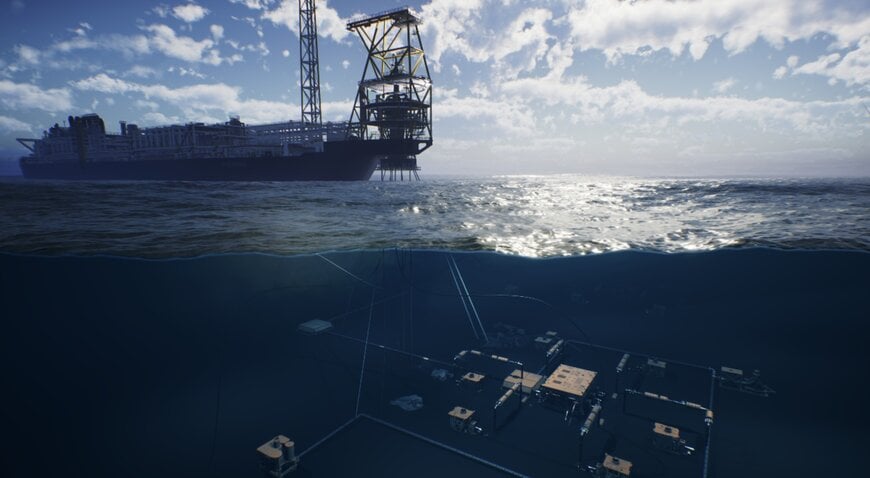
Sonardyne and AMOG have entered into a cooperation agreement to develop an integrated subsea asset monitoring service for offshore energy infrastructure. The collaboration combines underwater monitoring technology with engineering assessment capabilities to provide operators of floating offshore wind, oil and gas, pipeline, and riser systems with continuous insight into asset condition and performance.
Combining Monitoring Technology and Engineering Expertise
The partnership brings together two complementary areas of expertise. Sonardyne contributes underwater monitoring, positioning, and communication technologies, while AMOG provides engineering analysis focused on moorings, structural integrity, and vortex-induced vibration assessment.
Offshore energy operators face increasing pressure to maintain infrastructure reliability while extending asset service life and controlling inspection costs. Critical assets such as mooring systems, pipelines, and risers operate in harsh subsea environments where direct inspection can be complex, expensive, and infrequent.
The cooperation aims to address these challenges by integrating operational monitoring data with engineering models and integrity assessments.
Integrated Subsea Monitoring Architecture
A central element of the collaboration is the use of Sonardyne's Observer subsea asset integrity monitoring system. The platform is designed to collect high- and low-frequency motion data from underwater infrastructure while supporting integration with third-party sensors.
The system incorporates onboard edge analytics, enabling data processing at the source before transmission. This approach reduces the volume of data requiring transfer while allowing faster identification of operational changes or abnormal asset behavior.
By combining monitoring data with AMOG's engineering assessment methodologies, the partners aim to create a single workflow for evaluating structural loads, motions, and integrity conditions across offshore infrastructure.
Roles and Technical Responsibilities
Sonardyne is responsible for the subsea monitoring infrastructure, including sensing, positioning, communication, and data acquisition technologies. The company also provides the platform for integrating multiple sensor inputs and processing monitoring data in near real time.
AMOG contributes engineering assessment services, including mooring analysis, structural behavior evaluation, and integrity management expertise. The company's role is to interpret monitoring data within the context of engineering models, helping operators understand how measured asset behavior relates to operational risk and long-term performance.
The combined approach is intended to provide a more complete view of asset condition than monitoring or engineering analysis alone.
Deployment in Floating Offshore Wind
The first implementation is focused on a European floating offshore wind project, where the partners are developing a near-real-time mooring monitoring system.
Floating wind installations rely on complex mooring arrangements that are continuously exposed to wave, wind, and current loading. Monitoring the movement and loading of these systems is important for maintaining station keeping, structural integrity, and operational availability.
The project serves as a practical demonstration of how integrated monitoring and engineering assessment can support offshore renewable energy infrastructure.
Applications for Offshore Energy Operators
The solution is intended for floating offshore wind facilities as well as oil and gas developments that depend on subsea moorings, pipelines, and risers.
Potential applications include integrity assurance, condition-based maintenance planning, inspection prioritization, anomaly detection, and life-extension programs. By combining long-term monitoring data with engineering analytics, operators can better understand asset loading conditions and identify changes in performance over time.
Expected Operational Impact
The technical objective is to improve infrastructure visibility through continuous data collection and engineering interpretation.
The integration of near-real-time monitoring, edge analytics, and engineering assessment can support earlier identification of abnormal conditions, more informed maintenance decisions, and improved management of asset integrity throughout the operational lifecycle. For offshore energy operators, this may contribute to reduced unplanned downtime, more efficient inspection strategies, and enhanced understanding of subsea asset performance.
Edited by Aishwarya Mambet, Induportals Editor, with AI assistance.
www.sonardyne.com
