
www.technology4environment.com
05
'26
Written on Modified on
Caverion Delivers Major Heat Pump Plant to Boost Sustainable Heating
Caverion is building a 30-megawatt heat pump facility in Kajaani to recover data center waste heat, aiming to cover over 80% of local district heating.
www.caverion.fi
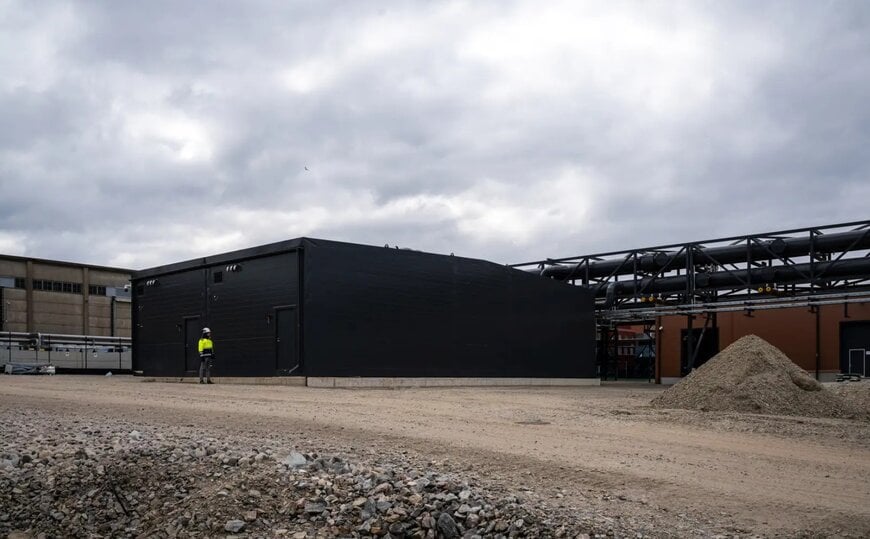
The transition toward carbon-neutral heating is increasingly reliant on large-scale industrial heat pump plants that can transform excess energy into a resource. A prime example of this evolution is the collaboration between Caverion and Loiste Lämpö in Kajaani, Finland. This project stands out from conventional solutions by utilizing climate-neutral hydrocarbon technology to capture waste heat from data centers, providing a scalable and future-proof model for urban district heating.
Harnessing Data Centers for Large-Scale District Heating
Data centers are exceptionally reliable heat sources because they produce stable thermal energy year-round. In Kajaani, the new heat pump plant, located at the Renforsin Ranta business park, will feature a total heating capacity exceeding 30 megawatts. Unlike many smaller-scale recovery systems, this facility is designed to cover over 80% of the entire Kajaani region's annual district heating needs. This high level of integration demonstrates how industrial synergy can significantly reduce a city's dependence on traditional combustion-based energy production.
Differentiation Through Climate-Neutral Hydrocarbon Technology
The primary differentiator of this facility compared to many existing plants is its reliance on natural refrigerants. While the European Union is tightening restrictions on synthetic refrigerants due to their environmental impact, this plant utilizes hydrocarbons such as isobutane, propane, and ammonia. These substances are climate-neutral, meaning they do not produce CO2 emissions even in the event of a leak. By choosing hydrocarbon-based industrial heat pumps, energy providers can ensure long-term regulatory compliance and a lower carbon footprint than competitors using older, synthetic-based technologies.
Phased Implementation and Infrastructure Scalability
The project is being executed in stages to ensure seamless integration with the existing energy grid. The first 12-megawatt phase is scheduled for commissioning in May 2026, followed by an additional 18 megawatts in 2027. A key advantage of this specific design is its modularity; the 600-square-meter facility is fully scalable, allowing for capacity increases as the data center's waste heat output grows. This flexibility provides a competitive edge in rapidly evolving industrial environments.
Securing Energy Reliability and Sustainability Goals
Integrating waste heat into the local energy mix enhances security of supply by diversifying heat production sources. For municipalities and energy companies, this technology offers a concrete method to reach carbon neutrality targets while maintaining high safety and quality standards. As the industrial waste heat potential remains largely untapped globally, large-scale projects like the one in Kajaani serve as a benchmark for how technologically advanced infrastructure can turn environmental challenges into economic and social benefits for local residents.
Edited by Evgeny Churilov, Induportals Media - Adapted by AI.
www.caverion.com
