
www.technology4environment.com
05
'26
Written on Modified on
Advanced Plastic Recycling Technology Portfolio Expansion
AIMPLAS presents integrated recycling technologies to improve material recovery efficiency and support circular plastic value chains across multiple industrial sectors.
www.aimplas.net
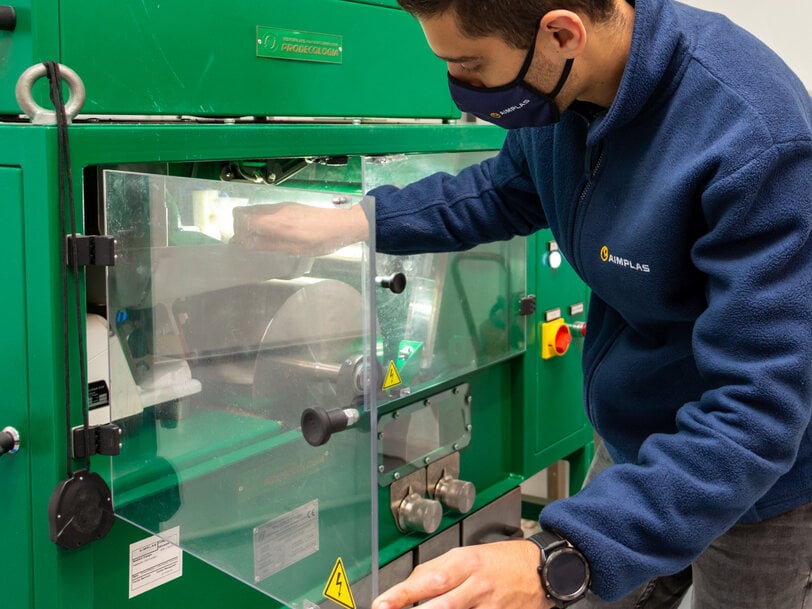
AIMPLAS, Plastics Technology Centre, is presenting a portfolio of mechanical, chemical and enzymatic recycling technologies designed to process complex plastic waste streams into secondary raw materials suitable for industrial reuse. The solutions target sectors such as automotive, packaging and electronics, contributing to the development of a more efficient digital supply chain for plastics.
Multi-Route Recycling for Complex Waste Streams
At PRS Europe 2026, held on 5–6 May at RAI Amsterdam, AIMPLAS is demonstrating that no single recycling pathway is sufficient for heterogeneous plastic waste. Instead, the centre combines multiple processing routes depending on polymer type, contamination level and end-use requirements.
The technology portfolio includes advanced sorting and identification systems based on near-infrared (NIR) spectroscopy, artificial vision and density-based separation. These systems enable the classification of mixed waste streams with high material specificity, a prerequisite for downstream recycling efficiency.
For multilayer and composite materials, solvent-based recycling techniques are applied. These processes use selective solvents and supercritical fluids (SCF) to separate polymer layers and remove additives, allowing recovery of high-purity fractions. This approach is particularly relevant for packaging structures where conventional mechanical recycling is limited.
Chemical and Enzymatic Recycling Mechanisms
Chemical recycling methods such as solvolysis, pyrolysis and gasification are used to convert plastic waste into monomers, oligomers or hydrocarbon fractions. These outputs can be reintegrated into polymer production or used as feedstock for fuels and fibres, depending on process conditions and yield optimisation.
Enzymatic recycling is applied primarily to polycondensation polymers such as PET and bioplastics like PLA. By using specific enzymes, controlled depolymerisation can be achieved under moderate conditions, enabling selective recovery of chemical building blocks or separation of multilayer structures. This method reduces thermal degradation compared to conventional processes and supports higher material recovery rates.
AIMPLAS also addresses traditionally non-recyclable materials through de-crosslinking technologies. These processes target crosslinked polymers such as crosslinked polyethylene (XPE), ethylene-vinyl acetate (EVA) and rubber-based materials, breaking network bonds to restore processability.
Upcycling and Process Validation
Beyond material recovery, the portfolio includes upcycling strategies that convert waste into higher-value applications. Examples include transformation into functional materials for automotive components or construction products, where performance requirements exceed those of the original waste stream.
To support industrial adoption, AIMPLAS integrates process simulation and techno-economic analysis. These tools evaluate parameters such as energy consumption, yield efficiency and cost per tonne, enabling companies to assess scalability and integration into existing manufacturing systems. This approach strengthens decision-making within the automotive data ecosystem and broader plastics value chain.
All technologies are developed under the Safe and Sustainable by Design (SSbD) framework. This includes life cycle assessment (LCA), life cycle costing (LCC), social life cycle assessment (sLCA) and health and safety (H&S) evaluation, ensuring that each recycling route meets environmental and economic performance criteria.
Application Across Industrial Sectors
The recycling solutions are applied to waste streams from automotive, packaging, textiles, construction, renewable energy systems, electrical and electronic equipment, as well as marine-derived plastics. This cross-sector applicability reflects the increasing need for interoperable recycling technologies capable of handling diverse material inputs.
Recyclability Testing and Technical Contribution
As part of the PRS Europe 2026 technical programme, AIMPLAS contributes to discussions on recyclability standards. A presentation titled “Backstage of recyclability testing: scientific aspects and key results” addresses testing methodologies, material behaviour during recycling and key performance indicators used to evaluate recyclability. The session takes place on 5 May from 12:45 to 13:30 at Conference Theatre One.
Edited by an industrial journalist Sucithra Mani with AI assistance.
www.aimplas.com
