
www.technology4environment.com
03
'26
Written on Modified on
Continental Eliminates Coal in Global Tire Production
All tire plants switched to biomass, biogas, renewable electricity and alternative fuels, reducing process-related CO₂ emissions and strengthening energy resilience.
www.continental.com
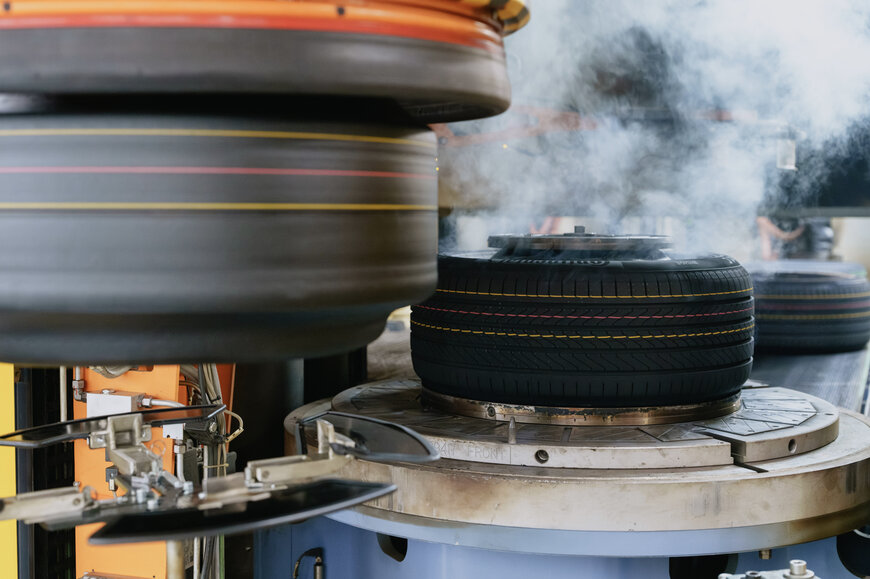
Automotive manufacturing and industrial heat-intensive processes are under increasing pressure to decarbonize while maintaining operational reliability. Continental has completed the global phase-out of coal and heavy fuel oil across its tire production network. Since January 2026, all tire plants have transitioned to alternative energy sources for steam generation and heating.
The shift replaces fossil-based fuels with biomass, biogas, electricity from renewable sources, and alternative fuels such as liquefied petroleum gas (LPG) and natural gas to ensure continuous thermal output.
Decarbonizing steam generation in tire manufacturing
In tire production, a significant share of energy demand is linked to heat-intensive processes such as vulcanization, where rubber is cross-linked to achieve its elastic properties. Historically, steam for these processes was generated directly from coal or heavy fuel oil in several locations.
Until the early 2020s, seven of Continental’s 19 production facilities relied on coal or heavy fuel oil to guarantee stable thermal supply, particularly in regions with limited gas or electricity infrastructure. Through phased investments and infrastructure upgrades, all sites now operate with diversified, lower-emission energy mixes.
Advanced electric technologies have further increased process flexibility and energy efficiency, reducing dependence on direct fossil-based combustion for heat generation.
Measurable CO₂ reduction and energy mix diversification
Since 2020, Continental has sourced electricity exclusively from renewable energy. The company reports that greenhouse gas intensity in production decreased by more than 10 percent in 2025 compared to the previous year, and by approximately 70 percent compared to 2019 levels.
Over the past four years, the transition to lower-emission energy sources has reduced tire production-related CO₂ emissions by around 180,000 metric tons.
The diversified energy mix now includes:
- Biomass and biogas for steam generation
- Electricity from renewable sources
- Liquefied petroleum gas (LPG)
- Natural gas
This multi-source strategy improves supply stability while lowering carbon intensity, particularly in regions where renewable infrastructure availability varies.
Site-level transformation examples
Energy solutions differ by location depending on local infrastructure and resource availability.
At the Gqeberha plant in South Africa, coal-based steam generation has been replaced with biomass, supplemented by LPG to meet residual demand.
In Kalutara, Sri Lanka, the commissioning of a second biomass boiler enabled the full elimination of heavy fuel oil, with all steam now generated from renewable biomass.
At the Otrokovice facility in the Czech Republic, collaboration with the regional energy supplier facilitated a gradual transition from coal to biomass and natural gas. Steam supplied to the plant is now generated predominantly from biomass, also supporting lower-emission district heating for surrounding communities.
Operational resilience and sustainability positioning
By replacing coal and heavy fuel oil with a diversified mix of lower-emission sources, Continental increases operational resilience while reducing exposure to fossil fuel volatility.
The transition aligns with broader sustainability targets and has been externally recognized: in 2025, the independent organization CDP awarded Continental an A- rating for climate transparency and CO₂ reduction measures.
Eliminating coal and heavy fuel oil across all tire production sites marks a structural change in industrial energy sourcing. For energy-intensive manufacturing sectors, the combination of electrification, renewable electricity procurement and alternative steam generation illustrates a scalable pathway toward lower-carbon production without compromising process reliability.
www.continental.com
Site-level transformation examples
Energy solutions differ by location depending on local infrastructure and resource availability.
At the Gqeberha plant in South Africa, coal-based steam generation has been replaced with biomass, supplemented by LPG to meet residual demand.
In Kalutara, Sri Lanka, the commissioning of a second biomass boiler enabled the full elimination of heavy fuel oil, with all steam now generated from renewable biomass.
At the Otrokovice facility in the Czech Republic, collaboration with the regional energy supplier facilitated a gradual transition from coal to biomass and natural gas. Steam supplied to the plant is now generated predominantly from biomass, also supporting lower-emission district heating for surrounding communities.
Operational resilience and sustainability positioning
By replacing coal and heavy fuel oil with a diversified mix of lower-emission sources, Continental increases operational resilience while reducing exposure to fossil fuel volatility.
The transition aligns with broader sustainability targets and has been externally recognized: in 2025, the independent organization CDP awarded Continental an A- rating for climate transparency and CO₂ reduction measures.
Eliminating coal and heavy fuel oil across all tire production sites marks a structural change in industrial energy sourcing. For energy-intensive manufacturing sectors, the combination of electrification, renewable electricity procurement and alternative steam generation illustrates a scalable pathway toward lower-carbon production without compromising process reliability.
www.continental.com
