
www.technology4environment.com
25
'26
Written on Modified on
GE Vernova Advances Polish Small Modular Reactor Fleet Design Development
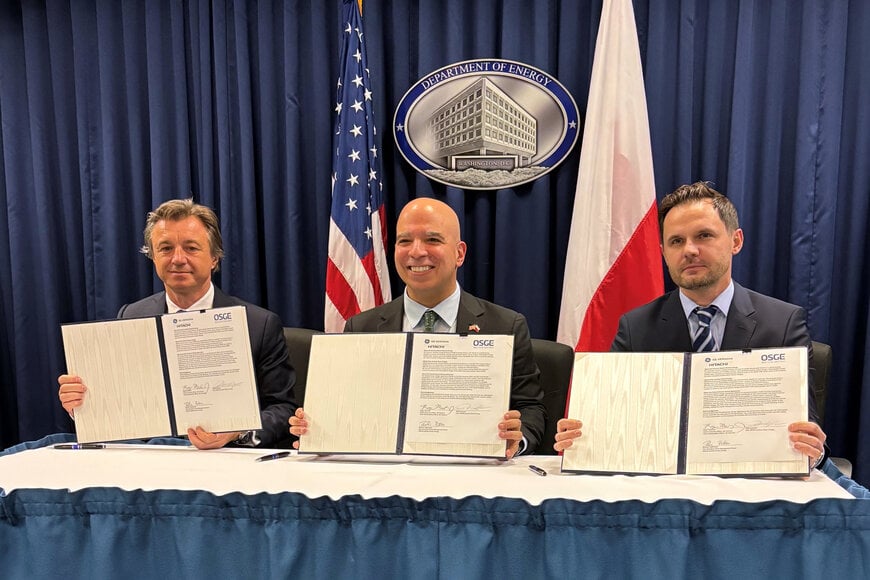
GE Vernova Hitachi and OSGE have signed a milestone agreement to develop a standardized BWRX-300 reactor design, accelerating Poland’s transition toward carbon-free energy.
www.gevernova.com
The deployment of the BWRX-300 small modular reactor (SMR) in Poland marks a significant shift in the nuclear landscape by leveraging established boiling water reactor technology to provide a lower-risk alternative to unproven designs. Unlike many competitors currently in the conceptual phase, the BWRX-300 utilizes simplified systems based on decades of operational data, positioning it as a primary solution for nations seeking a rapid and reliable transition to carbon-free baseload power.
Strategic Design Progression in Poland
The advancement of the BWRX-300 in Poland is characterized by a transition from theoretical planning to concrete engineering. GE Vernova and ORLEN Synthos Green Energy (OSGE) have initiated a comprehensive work program that focuses on adapting the standard plant design to meet specific Polish regulatory requirements and local site conditions. This process ensures that the technology is not just a generic template but a functional energy solution integrated into the national infrastructure. The collaboration involves finalizing the technical specifications necessary for the procurement of long-lead items, which is a critical step in maintaining a predictable construction timeline.
Technical Simplification as a Competitive Edge
A defining characteristic of the BWRX-300 that separates it from other SMR designs is its focus on simplification. By utilizing natural circulation and passive safety systems, the reactor eliminates a significant number of moving parts, such as large pumps and complex piping. This reduction in complexity leads to a substantial decrease in capital costs per megawatt compared to traditional large-scale reactors and more intricate SMR concepts. Furthermore, because it is an evolution of the existing ESBWR design, it benefits from a pre-established supply chain and licensed fuel types, reducing the regulatory hurdles often associated with "first-of-a-kind" nuclear projects.
Building a Standardized Global Fleet
The project in Poland is part of a broader international strategy to create a standardized fleet of reactors. By aligning design efforts between Poland, Canada, and the United States, GE Vernova aims to achieve economies of scale that are rarely seen in the nuclear industry. This "design once, build many" philosophy allows for shared learning across borders, where the lessons learned during the Polish deployment directly inform and improve subsequent projects. This standardized approach addresses the common industry challenge of cost overruns and delays, making the BWRX-300 a more predictable investment for utility providers and governments alike.
Integration into the Carbon-Free Energy Grid
The BWRX-300 is designed to complement intermittent renewable energy sources like wind and solar by providing a constant and stable supply of electricity. In the context of the Polish energy transition, this technology serves as a cornerstone for de-carbonizing heavy industry and the national grid. The ability to deploy these units in proximity to existing industrial hubs further enhances their utility, offering a scalable energy source that supports both environmental goals and energy security without the massive geographical footprint required by traditional power plants.
www.gevernova.com
