
www.technology4environment.com
18
'26
Written on Modified on
Industrial Energy Decarbonization at ABB Sasbach Manufacturing
Electrification, on-site solar and digital infrastructure reduce emissions and enhance energy resilience at ABB’s German manufacturing facility.
global.abb
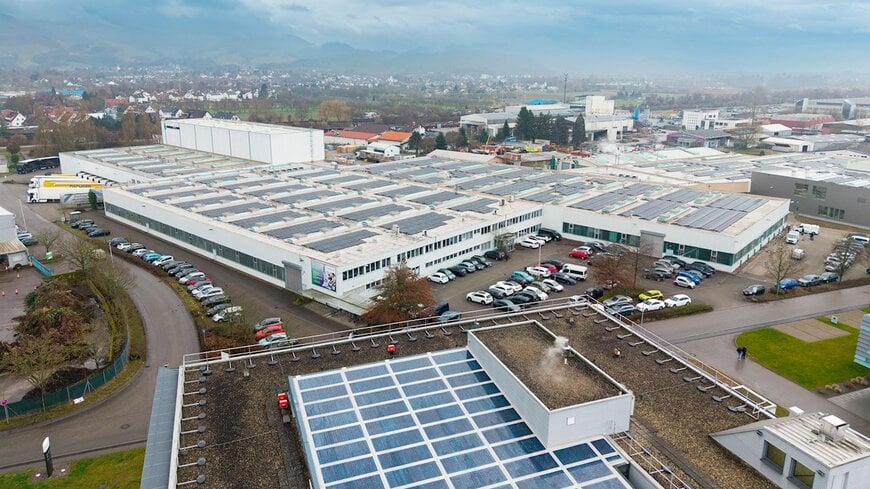
ABB has implemented a structured decarbonization program at its Sasbach manufacturing site in Germany, combining on-site renewable generation, electrified production processes and digital energy management to reduce operational emissions and strengthen energy resilience in industrial operations.
Industrial Context and Operational Scope
The Sasbach facility manufactures enclosures and energy distribution systems for regional markets. As part of ABB’s Mission to Zero™ framework, the site applies a data-driven roadmap to reduce Scope 1 and Scope 2 emissions while maintaining production stability.
Manufacturing accounts for a significant share of global CO₂ emissions, making energy efficiency and electrification central to European climate objectives. The Sasbach program addresses these challenges by integrating renewable electricity procurement, on-site generation and process optimization within existing industrial infrastructure.
Energy Infrastructure and Emissions Reductions
Total CO₂ savings at the site amount to approximately 3,786 tons. Around 2,700 tons result from the purchase of certified renewable electricity from the grid. On-site measures contribute an additional 1,086 tons of annual reductions.
Photovoltaic capacity has been expanded to 3,410 modules, generating approximately 1,500 MWh per year. This corresponds to roughly one-third of the site’s electricity demand. A newly installed transformer station integrates the renewable generation into the plant’s electrical system, ensuring voltage stability and efficient load management.
Electrified production upgrades and energy-efficiency improvements complement the renewable supply. A redesigned powder-coating facility operates across two levels and incorporates heat recovery, reducing installed heating capacity compared with conventional systems. Additional measures include full LED lighting, waste heat recovery from compressed air systems, and process optimization through automation controls.
Digital Energy Management Architecture
Energy flows across the facility are coordinated through ABB’s Building Management System (BMS) and energy management platform. Real-time monitoring enables load analysis, performance benchmarking and continuous optimization of consumption patterns.
The site also uses ABB i-bus® KNX for building automation, supporting intelligent lighting and facility control. This integrated digital infrastructure links generation, distribution and end-use consumption, allowing data-led decision-making and supporting industrial automation objectives.
Operational Resilience and Future Phases
On-site generation reduces exposure to energy price volatility and grid dependency. Twenty-one electric vehicle charging stations support low-emission mobility for employees and visitors.
Further phases include planned battery storage to buffer excess photovoltaic output and support peak demand or night-shift operations. Gas-based heating systems are being progressively replaced with electric heat pumps, reducing fossil fuel reliance. The site is also assessing the feasibility of on-site wind generation.
Measurable Impact within a Global Program
The Sasbach facility is one of 37 ABB locations participating in the Mission to Zero™ initiative. Collectively, these sites reduce more than 60,000 tons of CO₂e annually.
The Sasbach implementation demonstrates how renewable integration, electrified processes and digital energy management can deliver quantifiable emissions reductions while maintaining process reliability, cost stability and long-term energy resilience in manufacturing environments.
www.abb.com
