
www.technology4environment.com
27
'26
Written on Modified on
REDES4VALUE: AIMPLAS leads project transforming recycled nylon fishing nets into industrial applications
Chemical recycling of polyamide nets enables sustainable materials for packaging, agriculture, automotive and large-scale 3D printing.
www.aimplas.net
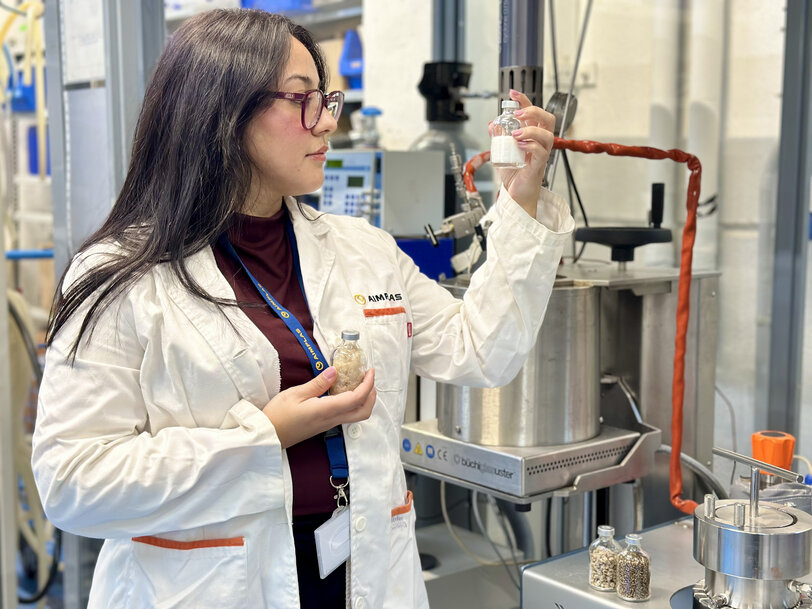
The REDES4VALUE project, led by AIMPLAS, is tackling one of the most persistent sources of marine pollution—abandoned fishing nets—by converting them into high-value industrial materials. Through advanced mechanical and chemical recycling technologies, the initiative is transforming discarded polyamide nets into recycled nylon suitable for demanding applications such as packaging films, agricultural covers, automotive components and large-format additive manufacturing.
The project is carried out by a consortium formed by AIMPLAS, UBE, ZIKNES, and the University of Valencia. It is funded by the IVACE+i, with co-financing from the European Regional Development Fund.
AIMPLAS drives chemical recycling innovation
While many fishing nets are made from polyethylene or polypropylene, REDES4VALUE focuses on polyamide nets, which offer strong potential for chemical recycling. AIMPLAS is leading the development of depolymerisation processes that allow recovery of monomers such as caprolactam, enabling the production of new polyamides with properties equivalent to virgin materials.
“Under optimised conditions, we are achieving monomer purities above 95% at laboratory scale and over 80% at pilot scale,” explains Nairim Torrealba, researcher in chemical recycling at AIMPLAS. “This makes it possible to repolymerise and obtain recycled polyamides suitable for high-performance industrial applications.”
Technologies under development include hydrothermal depolymerisation, ionic-liquid-assisted solvolysis and reactive extrusion, supported by life-cycle and techno-economic assessments to ensure industrial viability.
From marine waste to market-ready products
The recycled polyamides developed within REDES4VALUE are being validated for use in packaging and agricultural films, automotive components and large-format 3D-printed demonstrators. UBE is analysing pathways for commercialisation, while ZIKNES is adapting its equipment to validate additive manufacturing of large industrial parts using the recycled materials.
“These solutions reduce dependence on virgin raw materials while opening new opportunities for industry in terms of sustainability and circular economy models,” Torrealba adds.
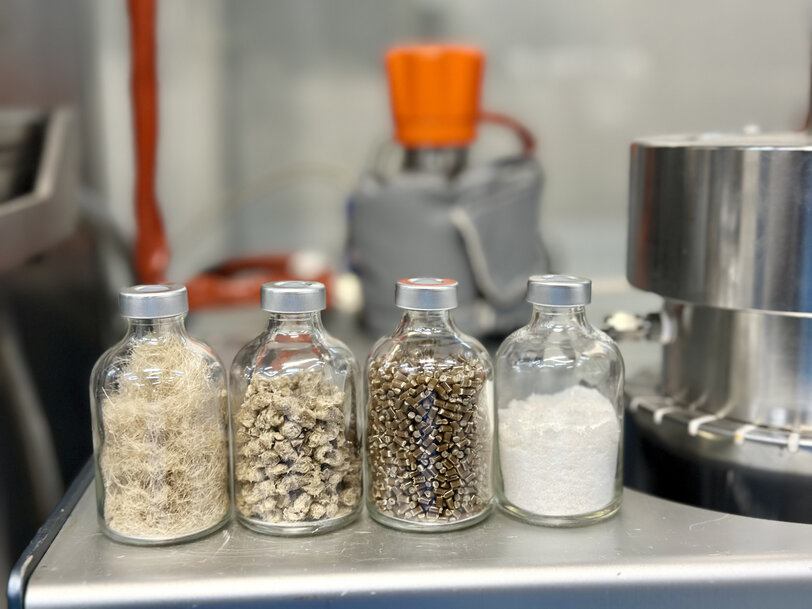
Circular value chain supported by international collaboration
A key element of the project is collaboration with Sea2See, which supplies fishing nets recovered in Ghana since 2019. This partnership ensures access to real-world waste streams and strengthens the project’s circular value chain from collection to industrial reuse.
Within the consortium, AIMPLAS leads chemical recycling activities, UBE focuses on scaling and repolymerisation, ZIKNES validates additive manufacturing applications, and the University of Valencia’s MATS research group supports solvolysis and kinetic studies.
Toward scalable chemical recycling solutions
By demonstrating that complex polyamide waste can be chemically recycled into high-performance materials, REDES4VALUE positions AIMPLAS and its partners at the forefront of sustainable plastics innovation. The project shows how chemical recycling can become a practical, scalable solution for reducing marine pollution while delivering tangible industrial value across multiple sectors.
www.aimplas.com
