
www.technology4environment.com
07
'26
Written on Modified on
High-Capacity Shore Power Systems for Container Terminals
ABB and Rotterdam Shore Power cooperate to deploy grid-connected shore power infrastructure for deep-sea container operations at the Port of Rotterdam.
global.abb
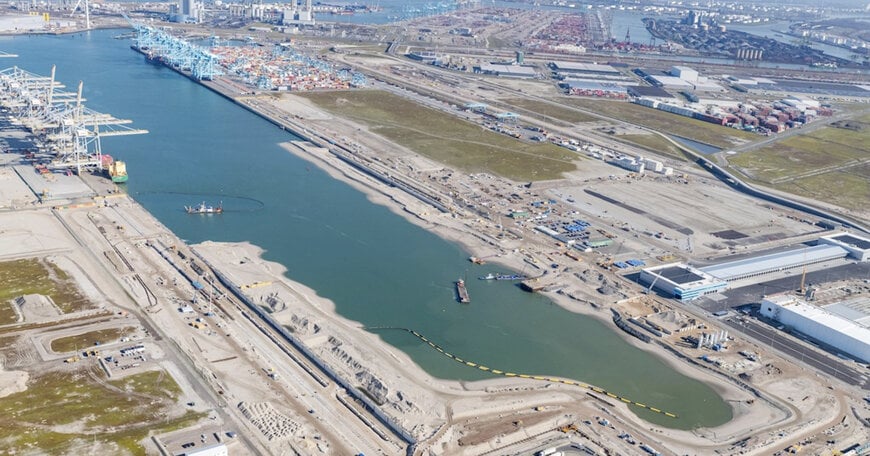
ABB and Rotterdam Shore Power are jointly implementing large-scale shore power systems to supply electricity to container vessels during port stays, targeting emissions reduction and regulatory compliance at Europe’s largest port.
Context of the Cooperation
Rotterdam Shore Power (RSP) is a joint venture established by the Port of Rotterdam Authority and Eneco to develop and operate onshore power supply infrastructure. ABB contributes engineering, power conversion, automation, and commissioning expertise. The cooperation addresses the technical challenge of supplying high-capacity, reliable electrical power to multiple container vessels simultaneously, while integrating with existing terminal operations and national grid infrastructure. The scale of the project—exceeding 100 MVA total capacity—requires coordinated system design, standardized interfaces, and phased deployment across multiple terminals.
Technical Solution and Responsibilities
ABB is responsible for the design, manufacturing, installation, testing, and commissioning of the shore power systems. The solution comprises prefabricated power conversion units, high-voltage connections, and control infrastructure designed to meet international shore connection standards for container vessels. ABB’s scope includes a supervisory control and data acquisition (SCADA) system for real-time monitoring, operational control, and metering-based energy accounting.
Rotterdam Shore Power oversees project coordination at port level, alignment with terminal operators, and long-term operation of the infrastructure. The system architecture is designed for scalability, allowing future capacity expansion and integration with renewable energy sources.
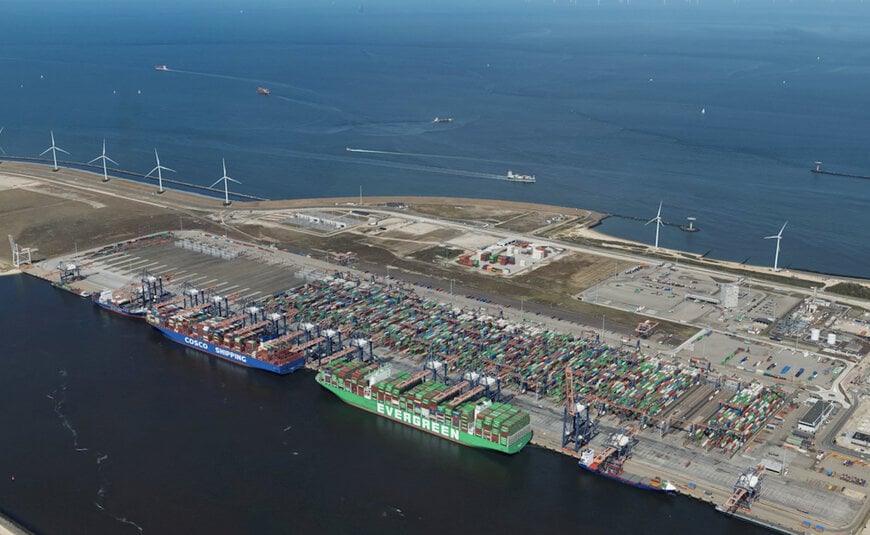
ECT Euromax terminal
Deployment and Implementation
The installations will serve three deep-sea container terminals: APM Terminals Maasvlakte II, Hutchison Ports ECT Delta, and Hutchison Ports ECT Euromax.
Across these sites, 35 shore connection points will be installed, enabling up to 32 container ships to be supplied with electricity simultaneously during loading and unloading. Prefabricated modules are used to shorten installation time and reduce disruption to ongoing terminal operations. Operations are scheduled to begin in the second half of 2028. Multi-year service agreements cover maintenance and technical support at each terminal.
Applications and Use Cases
The primary application is the supply of onshore electricity to berthed container vessels, allowing auxiliary engines to be shut down. This supports compliance with the EU FuelEU Maritime Regulation, which requires the use of onshore power or equivalent zero-emission solutions for large vessels calling at EU ports from 2030. The system improves operational stability, reduces local emissions, and lowers noise levels in port areas.
Results and Expected Impact
According to calculations by Rotterdam Shore Power, supplying shore power for at least 90 percent of vessels’ moored time at the three terminals could reduce annual carbon dioxide emissions by approximately 96,000 metric tons from 2030. Additional impacts include improved air quality and reduced noise exposure for port workers and surrounding communities.
www.abb.com
