
www.technology4environment.com
12
'25
Written on Modified on
Emergency Power Systems Gain Verified Environmental Transparency
Rolls-Royce introduces externally validated life-cycle declarations for mtu generator systems used in critical infrastructure.
www.rolls-royce.com
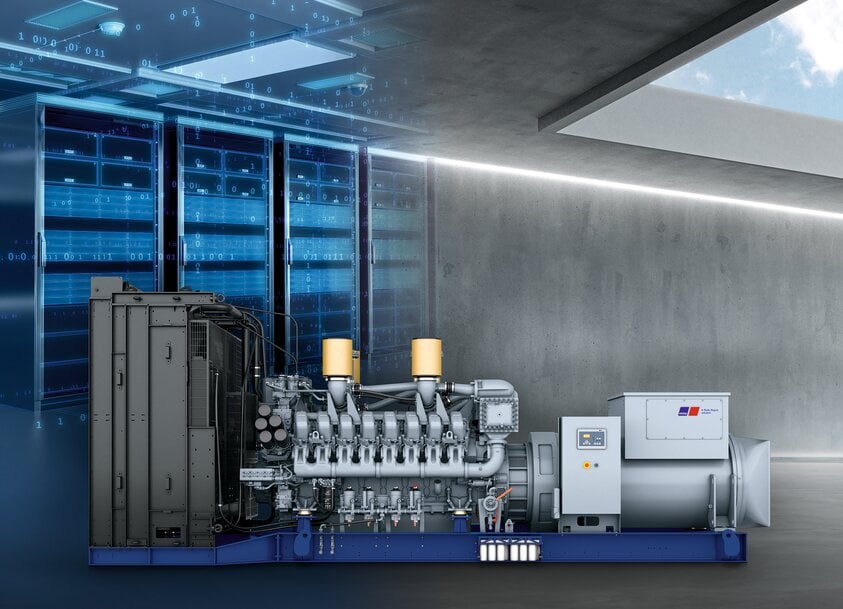
Data centers and operators of critical infrastructure increasingly need verifiable environmental data when selecting backup power equipment. Rolls-Royce has delivered mtu emergency power systems with independently verified Environmental Product Declarations (EPDs) for the first time in Europe, giving operators detailed insight into the life-cycle impact of generator sets used to secure energy supply during grid outages.
The declarations were developed with sustainability specialist Sphera and published in the international EPD System (Environdec). For the data center sector—where backup generation represents a key part of overall carbon reporting—these documents offer standardized, comparable metrics on emissions, resource use, and recyclability.
What the EPDs Cover and Why They Matter
The EPDs detail the full environmental footprint of the mtu 16V 4000 DS2500 and 10V 1600 generator systems. This includes raw material extraction, component manufacturing, assembly, operation, maintenance, and end-of-life recycling. The data is based on measured production and operating information from Rolls-Royce facilities, combined with life-cycle assessment inputs from Sphera.
This level of transparency responds to the growing requirement for documented sustainability performance in procurement processes across sectors such as data centers, telecommunications, industrial facilities, and energy-sensitive public infrastructure. Life-cycle declarations help operators evaluate total environmental impact rather than relying solely on operational emissions.
Lower Emissions Through Sustainable Fuels and Optimized Maintenance
The generator series covered by the new declarations is already approved for operation with hydrotreated vegetable oil (HVO) and e-fuels. HVO can replace fossil diesel without technical modifications, enabling operators to reduce lifecycle CO₂, nitrogen oxide, and particulate emissions by more than 90% when combined with modern exhaust aftertreatment.
Rolls-Royce has also aligned service intervals with emissions and efficiency goals. Instead of monthly checks, operators using the certified service program can conduct tests quarterly. This reduces maintenance-related emissions, fuel consumption during testing, and overall costs—a relevant factor for data centers operating large fleets of standby generators.
How These EPDs Compare With Industry Practices
EPDs for emergency power generators are still uncommon in the energy systems market. While manufacturers of building materials, HVAC equipment, and electrical components increasingly provide life-cycle declarations, backup power systems—especially high-power diesel units—rarely offer this level of documentation.
Rolls-Royce is among the first engine manufacturers to register externally verified EPDs for large emergency power generators in the ISO 14025 and EN 50693 frameworks. For operators, this enables comparison across attributes such as resource intensity, greenhouse gas emissions, waste streams, and end-of-life recovery rates.
However, because many competing generator models do not yet have verified EPDs, direct one-to-one comparisons across the same power classes are limited. For future procurement, wider adoption of standardized declarations could facilitate full benchmarking.
Relevance for Data Centers and Critical Infrastructure
In applications where continuous power availability is mandatory—such as hyperscale data centers, colocation facilities, hospitals, airports, and emergency response centers—backup systems form a significant part of operational carbon accounting. EPDs help operators:
- document environmental impact for regulatory compliance,
- support sustainability audits and certifications, and
- evaluate the benefits of switching from fossil diesel to low-carbon fuels.
With the first deliveries of EPD-verified generator systems to a European data center operator, the initiative marks an important step toward measurable environmental performance in standby power engineering.
