
www.technology4environment.com
11
'25
Written on Modified on
Plenitude Brings 150 MWp Caparacena Solar Complex Online to Southern Spain
A three-park photovoltaic project in Granada begins operations, delivering 320 GWh annually while incorporating environmental safeguards and preserving an Iberian archaeological site uncovered during construction.
www.eni.com
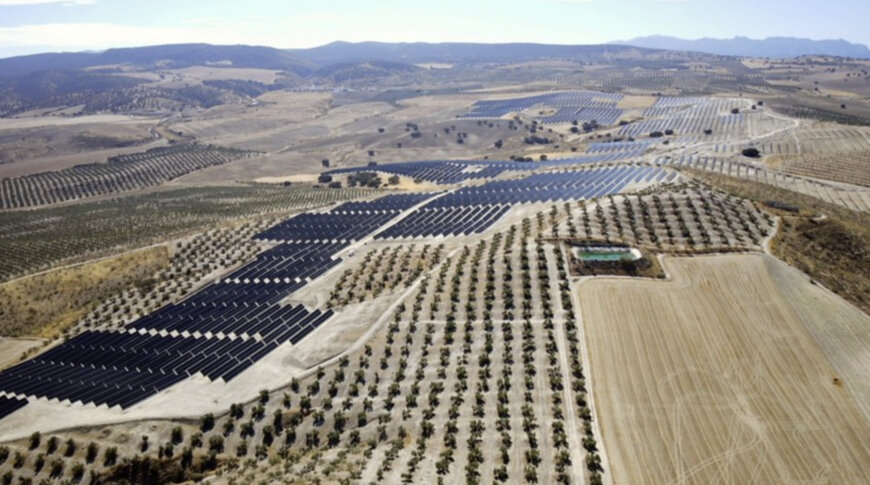
A 150 MWp solar asset designed for large-scale energy production in southern Spain
Plenitude has begun commercial operations at the Caparacena solar complex in Granada (Andalusia), a facility engineered to support Spain’s rising demand for renewable generation. The project spans 264 hectares across Chimeneas and Ventas de Huelma and integrates three photovoltaic parks, each rated at 50 MW, for a total installed capacity of 150 MWp. Equipped with more than 274,000 bifacial modules, the installation is designed to produce approximately 320 GWh per year, equivalent to the electricity consumption of a mid-sized provincial district.
Technical scope and what differentiates the installation
Compared with standard single-park utility PV solutions, Caparacena uses a distributed three-park layout to optimize land use and grid connection performance. The adoption of bifacial modules allows the system to capture reflected light from the ground, increasing annual yield without expanding the footprint. The project’s expected productivity positions it among the highest-output solar assets in the company’s Spanish portfolio.
Environmental and soil-preservation measures were built into the construction plan, consistent with the authorization requirements. These included vegetation management practices, erosion-control systems, and restricted-zone handling to protect local ecosystems during groundworks.
Archaeological discovery integrated into project compliance
During April 2024 construction work, mandated archaeological monitoring led to the identification of an Iberian necropolis dated to the 6th century BC, including ceramic funerary urns and additional artefacts. The site was preserved and documented under supervision of cultural-heritage authorities, demonstrating how large-scale energy projects can incorporate protective protocols for historically significant areas.
Positioning within Spain’s broader renewable landscape
With Caparacena entering service, Plenitude’s installed capacity in Spain approaches 1.5 GW, strengthening its overall footprint in Andalusia. The company already operates the 230 MW Guillena photovoltaic plant in Seville and is progressing an additional 200 MW at the Entrenúcleos project. These developments reflect the region’s high solar resource availability and the growing role of bifacial module technology in Spanish utility-scale deployments.
Expected applications and operational considerations
Caparacena is intended for grid-connected bulk power production, supplying renewable electricity into Spain’s national system. The design choices—multi-park segmentation, bifacial arrays, and site-specific environmental controls—make it suited for regions with high irradiance and available land but sensitive ecological or cultural constraints.
www.eni.com
